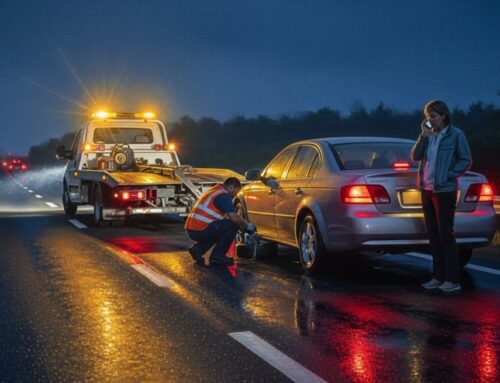
Imagine you are driving home late at night on a dark highway. Suddenly, your tire blows out. You pull over, but you have no spare and no way to call for help. This scenario happens to thousands of drivers every year. In that moment, having a policy that includes auto insurance with roadside assistance can turn a stressful ordeal into a simple phone call. Roadside assistance is no longer a luxury add-on. It is a practical safety net that protects your time, your wallet, and your peace of mind. Many insurers now offer this coverage as a standard endorsement or a low-cost add-on. But is it worth the extra premium? And how do you choose the right plan for your driving habits? This guide breaks down everything you need to know about combining auto insurance with roadside assistance, including what is covered, how much it costs, and when it makes sense to buy it separately.
What Is Auto Insurance With Roadside Assistance?
Roadside assistance is a service that provides emergency help when your vehicle becomes inoperable due to a breakdown, accident, or mechanical failure. When bundled with your car insurance policy, this coverage typically includes services like towing, flat tire changes, lockout assistance, fuel delivery, and jump-starts. Unlike a standalone roadside plan from a motor club, insurance-based roadside assistance is often cheaper because it is added to an existing policy. However, it is important to understand that using this service may count as a claim on your insurance record. In our guide on auto insurance with roadside assistance: is it worth it, we explore the trade-offs between cost and convenience.
Most major insurers offer roadside assistance as an optional endorsement. Some include it automatically in certain packages, such as comprehensive or collision policies. The coverage limits vary widely. For example, one company might offer up to $100 per towing incident, while another caps it at $150. Some policies limit the number of service calls per year, typically three to five. Before you sign up, check the fine print for exclusions like oversized vehicles, motorcycles, or RVs. If you drive a specialty vehicle, you may need a separate plan.
Key Benefits of Bundling Roadside Assistance With Insurance
Adding roadside assistance to your auto insurance policy offers several advantages over buying a standalone plan. First, the cost is usually lower. Many insurers charge between $3 and $10 per month for this endorsement. Compare that to a AAA membership, which can cost $50 to $150 per year depending on the tier. Second, the convenience of having one bill and one provider simplifies your life. You do not need to remember separate membership numbers or expiration dates. Third, the claim process is streamlined. If you break down, you call your insurer, and they dispatch a network provider. The service is often available 24/7, 365 days a year.
Another benefit is that roadside assistance can be a lifesaver for long-distance drivers or families with multiple vehicles. If you have teenage drivers or elderly relatives on your policy, this coverage gives everyone peace of mind. Some policies even extend coverage to the vehicle itself, meaning any driver operating your insured car can use the service. This is a major advantage over plans that are tied to a specific person. The auto insurance with roadside assistance: smart coverage article on our site explains how to maximize these benefits for your household.
What Services Are Typically Included?
Before you choose a plan, it helps to know exactly what services are covered. While each insurer has its own menu, most roadside assistance packages include the following core services:
- Towing: If your vehicle cannot be repaired on-site, it will be towed to the nearest qualified repair shop, usually within a certain mileage limit (e.g., 10 to 15 miles).
- Flat Tire Change: A technician will change your flat tire with your spare. If you have no spare, some plans offer towing instead.
- Lockout Assistance: If you lock your keys inside the car, a locksmith will be dispatched to open the door.
- Fuel Delivery: If you run out of gas, a service vehicle will bring enough fuel to get you to a station.
- Jump-Start: If your battery is dead, a technician will jump-start your vehicle.
Some higher-tier plans also include winching (pulling a vehicle out of a ditch or mud), battery replacement, and trip interruption coverage, which reimburses you for lodging and meals if a breakdown occurs far from home. Always read the policy details to understand limits and exclusions. For instance, many plans exclude services for vehicles used for commercial purposes or for off-road driving.
How Much Does It Cost?
The cost of adding roadside assistance to your auto insurance is surprisingly affordable. On average, drivers pay an extra $5 to $15 per month for this coverage. That is roughly $60 to $180 per year. Compare that to a standalone membership, which often costs $75 to $200 annually for basic service. However, the real question is whether the lower cost of insurance-based assistance is worth the potential impact on your insurance premiums. Unlike standalone plans, using your insurance roadside assistance may result in a claim on your record. In some states, insurers can raise your rates after a claim, even for non-accident services. This is a critical factor to consider.
To get the best value, compare the cost of the endorsement across multiple carriers. Some insurers offer it for free as a loyalty perk. Others include it in a premium package. If you are a safe driver with a clean record, the risk of rate increases may be low. But if you have a history of frequent breakdowns or long commutes, a standalone plan might be a smarter financial move. The auto insurance with roadside assistance: a smart add-on article provides a detailed cost-benefit analysis for different driver profiles.
When Should You Buy Standalone Roadside Assistance?
While bundling is convenient, it is not always the best option. Standalone roadside assistance plans, such as those from AAA, Good Sam, or Better World Club, offer distinct advantages. First, these plans are not tied to your insurance, so using them does not affect your premiums. Second, they often cover you as a person, not just a specific vehicle. If you drive multiple cars, rent a car, or ride in a friend’s vehicle, you are still covered. Third, standalone plans frequently offer higher towing limits and additional perks like travel discounts, maps, and trip planning services.
Consider a standalone plan if you fall into one of these categories:
- You drive an older vehicle that is prone to breakdowns.
- You frequently travel long distances or in remote areas.
- You have a poor driving record and want to avoid any insurance claims.
- You own multiple vehicles and want coverage for any driver.
On the other hand, if you have a new car with a manufacturer warranty that includes roadside assistance, you may not need any extra coverage at all. Always check what your warranty covers before buying additional services.
How to Choose the Right Policy
Selecting the best auto insurance with roadside assistance requires a step-by-step evaluation. Start by reviewing your current policy. Call your agent or log into your account to see if roadside assistance is already included. If it is not, ask for a quote to add it. Next, compare the coverage details. Look for the following:
- What is the per-incident limit for towing? Is it enough for your area?
- How many service calls are allowed per year? Is the limit shared among all drivers on the policy?
- Are there any exclusions for large vehicles, trailers, or motorcycles?
- Does the coverage extend to rental cars or borrowed vehicles?
- What is the response time guarantee, if any?
Once you have the answers, compare them with standalone plans. Do not just look at the monthly premium. Consider the total annual cost, the likelihood of needing the service, and the potential impact on your insurance rates. If you decide to switch insurers, use our free comparison tool to get quotes from multiple carriers. You can start by entering your ZIP code on our homepage to see personalized rates.
Frequently Asked Questions
Does roadside assistance count as a claim?
Yes, in most cases, using roadside assistance through your insurance is considered a claim. It may appear on your CLUE report (Comprehensive Loss Underwriting Exchange) and could affect your future premiums, especially if you make multiple claims in a short period. Some insurers do not increase rates for roadside claims, but others do. Ask your agent about their specific policy.
Can I use roadside assistance if I am not the policyholder?
It depends on the policy. Many insurers cover the vehicle itself, so any driver with permission can use the service. However, some plans only cover the named policyholder. If you frequently let others drive your car, confirm that the coverage follows the vehicle.
Is roadside assistance worth it for new cars?
New cars often come with manufacturer roadside assistance for the first few years. Check your warranty booklet before buying extra coverage. If your warranty covers towing and lockouts, you can save money by skipping the insurance add-on until the warranty expires.
What is not covered by roadside assistance?
Most plans exclude services for routine maintenance, such as oil changes or tire rotations. They also exclude repairs on-site beyond simple fixes like jump-starts or tire changes. Some plans do not cover vehicles used for commercial purposes, racing, or off-road driving. Always read the exclusions carefully.
For a deeper look at these questions, visit our detailed guide on auto insurance with roadside assistance: smart coverage which includes real-world examples and expert tips.
Roadside assistance is a small investment that can save you hundreds of dollars in towing fees and hours of waiting on the side of the road. By understanding your options and comparing policies, you can find the perfect balance of cost and coverage. Whether you bundle it with your auto insurance or buy a standalone plan, the most important thing is to have a backup plan before you need it. Take a few minutes today to review your current coverage and make sure you are protected. Your future self will thank you when you are stranded in the rain with a dead battery and a working phone number to call.