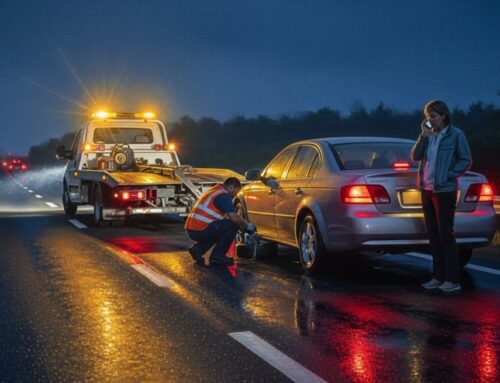
Imagine driving home late at night when a tire suddenly goes flat. You pull over, pop the trunk, and realize you have no jack. Or worse, your engine stalls on a busy highway. In moments like these, roadside assistance can turn a stressful situation into a minor inconvenience. Many drivers now look for auto insurance with roadside assistance to avoid paying out of pocket for tows, flat tires, or lockouts. This article explains how this coverage works, what it costs, and whether it is a smart addition to your policy.
What Is Roadside Assistance in Auto Insurance?
Roadside assistance is an optional add-on or bundled feature in many auto insurance policies. It provides emergency help when your vehicle becomes disabled while on the road. Services typically include towing, battery jump-starts, flat tire changes, fuel delivery, and lockout assistance. Unlike standard liability or collision coverage, which pays for damage to vehicles or property, roadside assistance focuses on getting you moving again quickly.
Insurance companies often offer this as a low-cost endorsement. For example, adding roadside assistance to your policy might cost between $2 and $5 per month. Some insurers include it automatically in certain packages, while others require you to opt in. The key is understanding what specific services are covered and any limits on how many times you can use them per year.
Common Services Included
Most roadside assistance plans cover the following:
- Towing to the nearest repair shop, usually up to a certain distance (e.g., 10 to 15 miles).
- Battery jump-start if your battery dies.
- Flat tire change using your spare tire (if available).
- Fuel delivery if you run out of gas, often up to a few gallons.
- Lockout assistance if you accidentally lock your keys inside the car.
Some premium plans also cover winching, extrication from ditches, and even trip interruption benefits. Always read the policy details to confirm what is included. In our guide on auto insurance with roadside assistance: is it worth it, we break down the typical costs versus benefits for different driver profiles.
How Much Does It Cost?
The price of roadside assistance varies by insurer and state. On average, adding this coverage increases your annual premium by $30 to $70. That is roughly $2.50 to $6 per month. Compare that to a single tow truck ride, which can cost $100 to $300 or more depending on distance and time of day. For most drivers, the add-on pays for itself after one use.
Some insurers offer roadside assistance as part of a broader package. For instance, comprehensive or collision policies may include it at no extra charge. Others sell it as a separate standalone product. When shopping for auto insurance with roadside assistance, compare the add-on cost across multiple carriers. A difference of $20 per year could matter over time.
Is It Worth Adding to Your Policy?
For most drivers, the answer is yes. Roadside assistance provides peace of mind and financial protection against unexpected breakdowns. However, it is not for everyone. If you have a new car with manufacturer roadside assistance, you may already be covered. Similarly, members of auto clubs like AAA might find overlapping coverage unnecessary.
Consider these factors when deciding:
- Your driving habits: Long commutes or frequent road trips increase the likelihood of needing help.
- Vehicle age: Older cars are more prone to breakdowns, battery issues, and flat tires.
- Your budget: The low monthly cost is easier to absorb than a surprise tow bill.
If you decide to add it, make sure you understand the service limits. Some policies cap the number of calls per year (e.g., four to six). Exceeding that limit means paying full price for additional calls. Also, check if the coverage follows you as a driver or only applies to the insured vehicle. Family drivers may appreciate broader protection.
How to Use Roadside Assistance When You Need It
Using roadside assistance is straightforward. Most insurers provide a 24/7 phone number or mobile app to request help. When you call, give your location, a description of the problem, and your policy number. The dispatcher will send a local service provider to your location. Typical response times range from 30 minutes to an hour in urban areas, longer in rural locations.
Some tips for a smooth experience:
- Pull over to a safe location away from traffic if possible.
- Turn on your hazard lights to alert other drivers.
- Stay inside your vehicle with doors locked until help arrives, especially on highways.
After the service, you typically pay nothing out of pocket. The insurer bills the towing or repair company directly. This is a major advantage over standalone roadside plans that sometimes require upfront payment and reimbursement. For a deeper look at how this compares to other options, see our article on auto insurance with roadside assistance: a smart add-on.
Comparison With Standalone Roadside Plans
Many drivers wonder whether to add roadside assistance to their auto insurance or buy a separate membership. Both have pros and cons. Insurance-based roadside assistance is usually cheaper per year and integrates with your existing claims process. However, standalone plans like AAA or Good Sam often offer broader coverage, including longer towing distances and trip interruption benefits.
Here is a quick comparison:
- Cost: Insurance add-on ($30-$70/year) vs. AAA membership ($50-$150/year).
- Coverage limits: Insurance caps service calls (often 4-6 per year) while AAA offers unlimited calls on some tiers.
- Service area: Insurance uses local contractors; AAA has a nationwide network of approved providers.
If you rarely drive long distances or have a reliable newer car, the insurance add-on is likely sufficient. Frequent road trippers or those with older vehicles may prefer a standalone plan for its broader benefits. Either way, having some form of roadside assistance is better than relying on expensive pay-per-use towing.
Frequently Asked Questions
Does roadside assistance cover towing to any shop?
Most policies tow your vehicle to the nearest qualified repair facility. Some allow you to choose a specific shop, but it must be within the distance limit specified in your policy (often 10 to 15 miles). Towing beyond that limit may cost extra.
Will using roadside assistance raise my insurance rates?
In most cases, no. Roadside assistance is considered a service, not a claim. Insurance companies typically do not increase premiums for using it. However, filing multiple requests in a short period could flag your account for review. Check with your insurer to confirm their policy.
Can I add roadside assistance to an existing policy?
Yes, you can usually add it at any time, not just at renewal. Contact your agent or log into your online account to make the change. The additional premium will be prorated for the remainder of your policy term.
Is roadside assistance the same as rental car coverage?
No. Roadside assistance provides emergency services at the breakdown location. Rental car coverage pays for a temporary vehicle if yours is in the shop after a covered claim. They are separate add-ons, though some insurers bundle them.
Final Thoughts on Adding Roadside Assistance
Roadside assistance is a low-cost, high-value addition to any auto insurance policy. It spares you the inconvenience and expense of arranging emergency help on your own. Whether you are a daily commuter, a parent shuttling kids, or a long-distance traveler, this coverage offers tangible benefits. Before purchasing, review your current policy and compare quotes from different insurers. A small monthly investment can save you hundreds of dollars and hours of frustration. For more insights on this topic, read our complete analysis of auto insurance with roadside assistance: smart coverage to see how it fits into your overall insurance strategy.