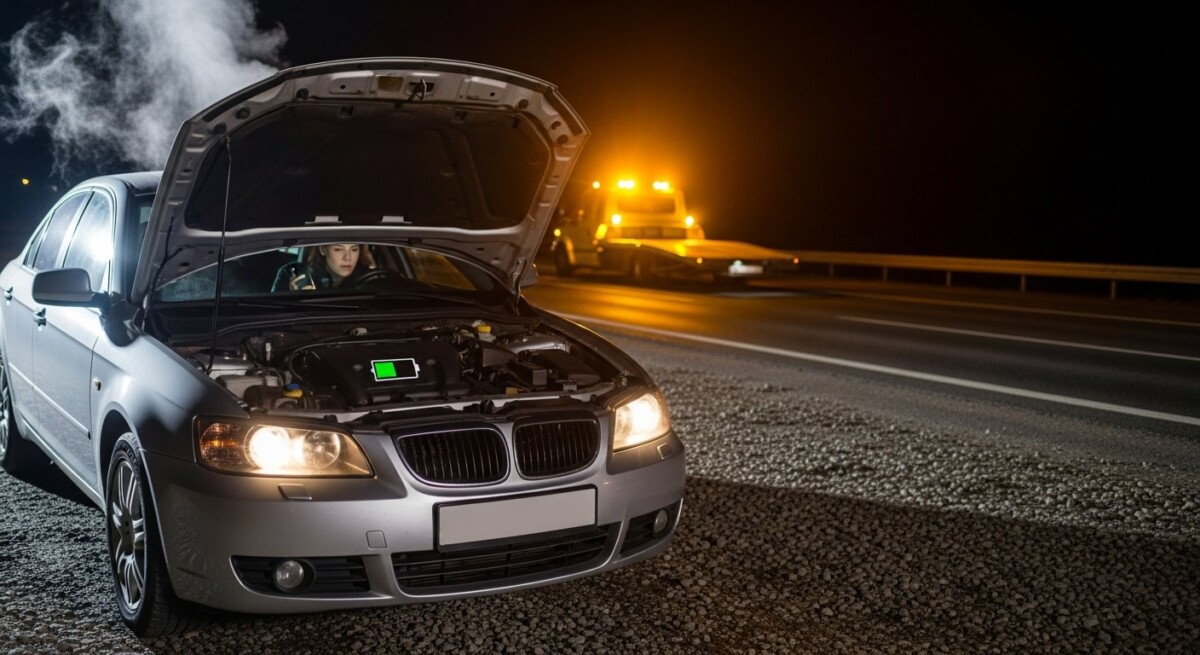
You are driving home late at night on a dark highway when your engine sputters and dies. You pull over, pop the hood, and realize you have no idea what went wrong. Your phone battery is at 15 percent. You need help, but you also worry about the cost of a tow truck. This scenario plays out for thousands of drivers every year. Having auto insurance with roadside assistance can turn a stressful breakdown into a manageable inconvenience. Instead of scrambling for a random towing company or calling a friend at midnight, you simply call the number on your insurance card. Within minutes, help is dispatched. This article explains exactly what roadside assistance coverage includes, how it works, when it makes sense, and how to choose the best option for your needs.
What Is Auto Insurance With Roadside Assistance?
Roadside assistance is an add-on or bundled service that provides emergency help when your vehicle becomes disabled. It is not a standalone policy. You typically add this coverage to your existing car insurance policy for a small extra premium. Some insurers include basic roadside assistance as part of a comprehensive or collision package, while others offer it as a separate endorsement. The core idea is simple: you pay a modest annual fee, and in return you get access to a network of service providers who can help you with common roadside emergencies.
Coverage details vary by insurer, but most plans include towing, flat tire changes, battery jump-starts, lockout assistance, fuel delivery, and winching or extrication if your vehicle is stuck in mud, snow, or a ditch. Some policies also cover minor mechanical repairs at the roadside, such as fixing a loose hose or replacing a serpentine belt. The key benefit is predictability. Instead of paying market rates for a tow truck in an emergency, you pay nothing upfront (up to your policy’s limit) or a small service fee. In our complete guide to auto insurance in Massachusetts for drivers, we explain how state-specific requirements can affect your coverage options, including roadside assistance.
How Roadside Assistance Coverage Works
When you experience a breakdown, you call the claims number provided by your insurance company. A dispatcher asks for your location, vehicle description, and the nature of the problem. They then send a nearby service provider from their network. Most insurers have partnerships with national towing networks, so help can arrive within 30 to 60 minutes in most areas. You do not need to pay the tow truck driver directly. The insurance company covers the cost up to a preset limit, such as $100 or $150 per incident. If the actual cost exceeds that limit, you are responsible for the difference.
Each policy has a service limit per incident and an annual cap on the number of calls you can make. For example, you might be allowed four service calls per year. If you use roadside assistance more than that, the insurer may deny additional claims or charge you a higher premium at renewal. Some policies also have a waiting period before coverage kicks in, typically 24 to 48 hours after you purchase the policy. This prevents drivers from buying coverage right after a breakdown and filing a claim immediately. It is important to read the fine print so you understand exactly what is and is not covered. For instance, if your car breaks down because of a mechanical failure that you could have prevented with regular maintenance, some insurers might still cover the tow but flag the incident for review.
What Does Roadside Assistance Typically Include?
The scope of services varies, but most standard auto insurance with roadside assistance plans covers the following five core services. Here is a quick breakdown of what you can expect:
- Towing: Your vehicle is towed to the nearest qualified repair shop or a destination of your choice within a certain mileage radius (often 10 to 15 miles).
- Flat Tire Change: A technician will replace your flat tire with your spare. If you do not have a spare, they may tow your vehicle to a tire shop.
- Battery Jump-Start: If your battery is dead, the service provider will jump-start your vehicle on the spot.
- Lockout Assistance: If you lock your keys inside the car, a locksmith or technician will attempt to open the door without damaging the vehicle.
- Fuel Delivery: If you run out of gas, the service provider delivers enough fuel (usually 2 to 5 gallons) to get you to a nearby station.
Some premium policies also include winching (pulling your vehicle out of a ditch or snowbank), trip interruption coverage (reimbursement for lodging and meals if a breakdown occurs far from home), and rental car reimbursement while your vehicle is being repaired. These extras can significantly increase the value of the coverage, especially for long-distance commuters or frequent road trippers. For example, if your alternator fails 200 miles from home, trip interruption coverage could pay for a hotel room and a rental car while your vehicle is in the shop. Without it, you would bear those costs out of pocket.
How to Compare Roadside Assistance Options
Not all roadside assistance plans are created equal. When shopping for auto insurance with roadside assistance, consider these key factors. First, check the service limits. Does the policy cover unlimited towing distance or only 10 miles? A 10-mile limit may be fine for a flat tire near home, but inadequate if you break down in a rural area far from a repair shop. Look for policies that offer at least 15 to 20 miles of towing distance.
Second, review the annual call limit. Most insurers allow three to five service calls per year. If you drive an older vehicle or live in an area with harsh winters, you might need more. Some insurers offer unlimited calls for a higher premium. Third, examine the coverage for lockouts and fuel delivery. Some basic plans exclude lockout assistance or fuel delivery entirely. Fourth, consider whether the policy covers you in any vehicle you are driving or only in your insured car. Many policies extend coverage to rental cars and vehicles you borrow from friends. Finally, compare the cost. Roadside assistance typically adds $20 to $60 per year to your premium. That is a small price for peace of mind, but only if the coverage meets your needs.
If you are comparing multiple policies, our article on auto insurance with roadside assistance as a smart add-on provides a detailed cost-benefit analysis that can help you decide whether the extra premium is worth it for your specific driving habits.
Roadside Assistance vs. Standalone Memberships
Many drivers wonder whether they should add roadside assistance to their car insurance or buy a standalone membership from a provider like AAA or Good Sam. Each option has trade-offs. Insurance-based roadside assistance is usually cheaper upfront because the cost is bundled into your premium. It also simplifies billing: you deal with one company for everything related to your car. However, insurance-based plans often have lower service limits and may count against your claims history. Filing a roadside assistance claim could theoretically lead to a premium increase at renewal, especially if you file multiple claims in a short period.
Standalone memberships typically offer higher service limits, more flexible coverage (you are covered in any car, not just your insured vehicle), and access to additional benefits like travel discounts, maps, and trip planning. The annual fee for a basic AAA membership is around $60 to $100, which is comparable to or slightly higher than the cost of adding roadside assistance to your insurance. The key difference is that using a standalone membership does not affect your insurance rates. For drivers with a clean claims history, this can be a significant advantage.
That said, insurance-based roadside assistance is often more convenient because you only have one number to call for accidents, claims, and roadside help. If you already have a good relationship with your insurer, adding the coverage is a simple endorsement. Some insurers also offer a hybrid model: you can add roadside assistance to your policy but choose to use a third-party network if you prefer. Compare the specific terms of your policy before deciding.
Common Exclusions and Limitations
Even the best auto insurance with roadside assistance has exclusions. Understanding these can prevent unpleasant surprises. Most policies exclude coverage for vehicles used for commercial purposes, such as delivery vans or ride-share cars. If you drive for Uber or Lyft, you may need a separate commercial policy or a ride-share endorsement. Some policies also exclude coverage for vehicles that are not in safe operating condition, such as a car with bald tires that caused a blowout. If the technician determines the breakdown resulted from lack of maintenance, the insurer may deny the claim.
Another common limitation is the distance limit for towing. Some policies only pay for towing to the nearest repair shop, not to your preferred mechanic. If your trusted shop is 30 miles away, you might have to pay the difference. Additionally, most policies exclude coverage for vehicles that are already in a repair shop (for non-emergency work) or for vehicles that need to be towed after an accident (that would fall under collision coverage). Finally, some policies have a mileage cap on fuel delivery, such as providing only enough gas to reach a station within 5 miles. If you are stranded far from a gas station, you may need to pay for extra fuel.
Who Should Add Roadside Assistance?
Roadside assistance is not necessary for every driver. If you drive a new vehicle with a comprehensive warranty that includes roadside help, you may already be covered. Many automakers, including Toyota, Honda, and BMW, offer complimentary roadside assistance for the first few years of ownership. In that case, adding insurance-based coverage would be redundant. However, if you drive an older car with high mileage, or if you frequently travel long distances, roadside assistance is a wise investment. The average cost of a single tow truck call without insurance is $100 to $300. If you need just one tow every few years, the coverage pays for itself.
Drivers who live in rural areas or areas with extreme weather conditions also benefit greatly. Snowstorms, floods, and heat waves can cause unexpected breakdowns. Having a reliable service network can reduce wait times and ensure you get help even in remote locations. Parents of teenage drivers often add roadside assistance for peace of mind. If your child gets a flat tire or runs out of gas at night, they can call for help without needing to rely on strangers or wait for you to drive an hour to rescue them. For a detailed look at how this coverage fits into a broader protection strategy, see our article on auto insurance with roadside assistance as smart coverage.
How to File a Roadside Assistance Claim
Filing a claim is straightforward, but knowing the steps in advance can save time and reduce stress. First, ensure you are in a safe location. If possible, move your vehicle to the shoulder or a parking lot. Turn on your hazard lights. Then call your insurance company’s roadside assistance hotline. Have your policy number, vehicle location, and a description of the problem ready. The dispatcher will confirm your coverage and send a service provider. Stay with your vehicle until help arrives. If you have to leave the car for any reason (for example, to walk to a gas station), inform the dispatcher so they can relay that information to the technician.
After the service is completed, the provider will submit a report to your insurance company. You should receive a confirmation email or text message with the details of the service. If you are not satisfied with the response time or the quality of service, you can file a complaint with your insurer. Some policies guarantee a response time of 60 minutes or less. If the provider fails to meet that standard, you may be entitled to a credit or refund. Keep a copy of the service receipt for your records. In some cases, if you pay out of pocket because you could not reach your insurer, you can submit a reimbursement claim later, though this is not guaranteed.
Frequently Asked Questions
Does roadside assistance cover me if I am not driving my own car?
It depends on the policy. Many insurance-based roadside assistance plans cover you in any vehicle you are driving, including rental cars, borrowed cars, or even a friend’s car. However, the coverage is usually secondary: it kicks in only if the vehicle owner does not have their own roadside assistance. Always check your policy wording for the phrase “covered vehicle” or “non-owned vehicle.”
Will using roadside assistance raise my insurance rates?
In most cases, no. Roadside assistance claims are typically classified as “no-fault” or “non-accident” claims. They do not affect your driving record or your premium in the same way that an at-fault accident does. However, if you file multiple roadside assistance claims in a short period, your insurer might view you as a higher risk and adjust your rates at renewal. Check your policy’s fine print or ask your agent directly.
Can I add roadside assistance after I buy a policy?
Yes. Most insurers allow you to add roadside assistance at any point during your policy term. There is usually no waiting period for the coverage to become effective, though some insurers impose a 24- to 48-hour waiting period for towing services. If you know you are going on a long road trip, add the coverage a few days before you leave to avoid any gap.
What is not covered by roadside assistance?
Common exclusions include: towing a trailer or another vehicle, providing fuel for vehicles that require diesel (if your policy only covers gasoline), winching if the vehicle is more than a certain distance from a paved road, and services for vehicles used for commercial purposes. Also, if your car needs extensive mechanical repairs that cannot be done at the roadside, the technician may only tow it to a shop rather than attempt a fix.
Making the Right Choice for Your Driving Needs
Auto insurance with roadside assistance is a practical, affordable way to protect yourself from unexpected breakdowns and the high cost of emergency towing. The key is to evaluate your driving habits, the age and condition of your vehicle, and the coverage options available from your insurer. If you drive an older car, travel frequently, or live in an area with harsh weather, the coverage is almost certainly worth the modest annual premium. If you already have a standalone membership or a new car warranty that includes roadside help, you may not need it.
Before you make a decision, compare the service limits, annual call caps, and exclusions of at least two or three insurers. Look for a policy that offers at least 15 miles of towing, four or more service calls per year, and coverage for lockouts and fuel delivery. If you are not sure which option fits your budget, use our free comparison tool to get personalized quotes from multiple carriers. For drivers who have recently been in an accident and need help navigating the claims process, our step-by-step guide to filing your California auto insurance claim offers practical advice that applies to drivers in most states. Remember, the goal is to avoid surprise bills and maximize your recovery when something goes wrong. With the right coverage in place, you can drive with confidence knowing that help is just a phone call away.
For professional advice tailored to your unique situation, call us at 833-275-7533. Our licensed agents can review your current policy, explain your options, and help you add roadside assistance that fits your driving lifestyle.