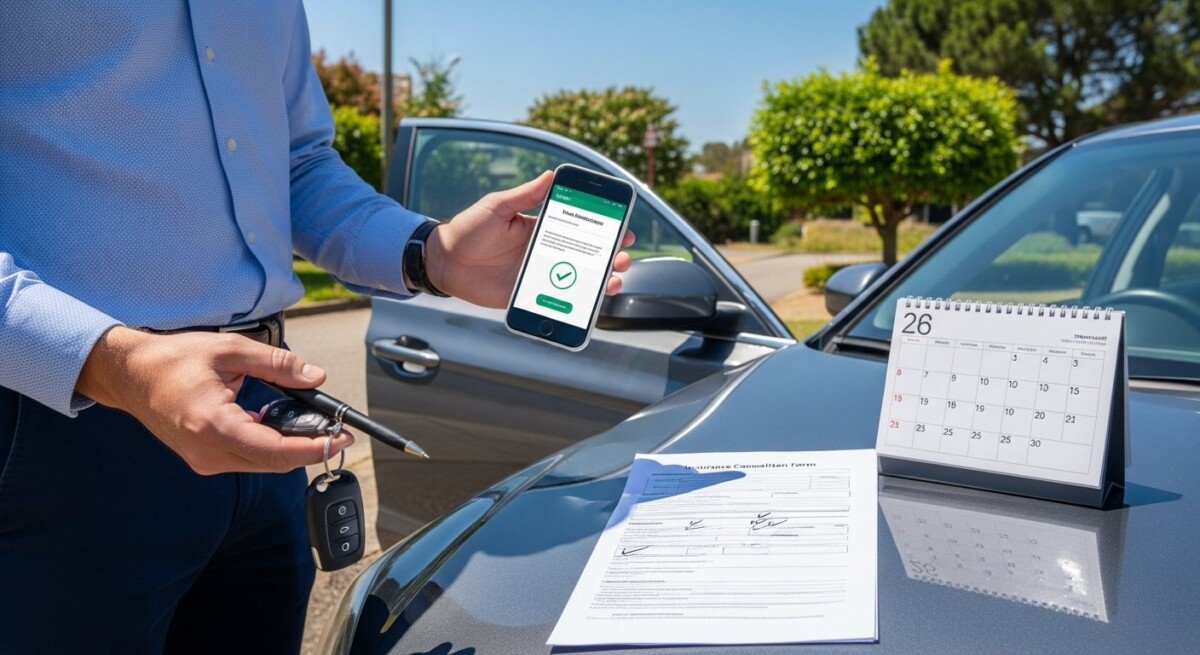
Imagine this: you just sold your car, switched to a new job with a company fleet vehicle, or found a significantly lower rate with another insurer. The question that immediately comes to mind is a simple one: can you cancel auto insurance anytime? The short answer is yes, you generally can cancel your policy at any point during the coverage term. However, the process is not always as straightforward as making a phone call and walking away. There are critical rules, potential penalties, and timing considerations that every driver should understand before terminating a policy. This guide walks you through exactly what to expect when canceling your auto insurance, how to avoid financial pitfalls, and the steps to take for a smooth transition to a new provider.
Understanding Your Right to Cancel Auto Insurance
State laws across the United States give policyholders the right to cancel their auto insurance policy at any time for any reason. This is a standard provision in most insurance contracts. Unlike many other types of contracts that lock you in for a fixed period, auto insurance policies are typically written as month-to-month agreements, even when you pay for six months upfront. Insurers offer this flexibility because they want to remain competitive. If a customer is unhappy, they would rather the person leave gracefully than stay and complain or file excessive claims.
That said, the ability to cancel anytime does not mean you can do so without consequences. The specific terms of your cancellation depend entirely on the language in your policy contract. Most insurers require written notice or a phone call to process the cancellation. Some may charge a cancellation fee, especially if you are in the middle of a policy term. Others may require proof of new coverage before they release you from the contract, particularly if you are canceling mid-term for non-payment reasons. Always check your policy documents or call your agent to confirm the exact procedure.
When Cancellation Can Hurt Your Wallet
While you have the right to cancel, doing so at the wrong time can lead to unexpected costs. One of the most common financial penalties is a short-rate cancellation fee. This applies when you cancel a policy before the end of its term and you have not paid the full premium. The insurance company calculates the earned premium using a formula that gives them a higher percentage of the premium than the actual days you were covered. This penalty is designed to cover the insurer’s administrative costs and to discourage mid-term cancellations.
Another hidden cost is the potential loss of a multi-policy discount. If you bundle your auto insurance with your homeowners or renters insurance, canceling just the auto policy could cause your home insurance rate to spike. You might also lose a paid-in-full discount if you paid for six months and cancel after three months. The insurer might refund only the unearned premium minus a cancellation fee. For example, if you paid $600 for a six-month policy and cancel at month three, you might receive a refund of only $250 instead of $300 because of the short-rate penalty. Understanding these financial implications is crucial before making the decision to switch.
No-Grace Period: The Danger of a Coverage Gap
One of the biggest mistakes drivers make when canceling auto insurance is assuming they have a grace period to find new coverage. In most states, there is no grace period for insurance cancellation. The moment your old policy ends, you are legally uninsured. If you are involved in an accident during that gap, you face serious consequences: you could be personally liable for all damages, face fines or license suspension, and be charged significantly higher rates when you eventually buy a new policy. This is why it is essential to have your new policy start on the exact same day your old policy ends, not the day after.
To avoid a coverage gap, follow this simple timeline: purchase your new policy at least one week before your intended cancellation date. Request that the new policy takes effect on the same day your current policy will be canceled. Do not cancel the old policy until you have received written confirmation that the new policy is active. If you are switching to a new insurer, they can often handle the cancellation for you as part of the switch. However, it is always safer to confirm with both companies. A lapse in coverage, even for one day, can stay on your insurance record for years and increase your premiums by 10-30 percent.
How to Cancel Your Auto Insurance Policy
The process for canceling an auto insurance policy varies by company, but it generally follows a similar pattern. The most reliable method is to submit a written cancellation request. This can be done via email, through your insurer’s online portal, or by mailing a signed letter. Your request should include your policy number, the effective date of cancellation, and your signature. Some insurers also allow cancellation over the phone, but it is wise to follow up with written confirmation to have a paper trail. If you cancel by phone, ask the representative for a confirmation number and a written notice of cancellation sent to your email or mailing address.
If you are canceling because you are switching to a new insurance company, the new provider will often handle the cancellation on your behalf. This is convenient, but you should still verify that the cancellation was processed correctly. A few days after switching, log into your old account to confirm the policy is marked as canceled. If you see any charges or fees, contact the old insurer immediately. For those canceling because they no longer own a vehicle, you typically need to provide proof of sale, such as a bill of sale or a transfer of title. The insurer may require this documentation before processing the cancellation and issuing a refund.
Step-by-Step Cancellation Checklist
To ensure a smooth cancellation process, follow these steps in order. Rushing through any of them could lead to a coverage gap or unexpected fees.
- Review your policy terms: Look for cancellation fees, notice periods, and refund policies. This information is usually in the declarations page or the general terms section.
- Get a new policy first: Secure new coverage with a start date that matches your current policy’s end date. Do not cancel until the new policy is active.
- Notify your current insurer: Submit a written cancellation request via email, online portal, or certified mail. Include your policy number and desired cancellation date.
- Confirm the cancellation: Request a confirmation number or written notice. Check your old account online to ensure the policy is closed.
- Request a refund: If you paid in advance, ask for the unearned premium refund. For those who switched providers, the new insurer may handle this step.
After completing these steps, keep all documentation for at least one year. If there is a dispute about a lapse or a refund, you will have proof of the cancellation date and the confirmation. This is especially important if you cancel by phone, as verbal agreements can be disputed later. A paper trail protects you from administrative errors that could affect your driving record or credit score.
Special Considerations for High-Risk Drivers
Drivers classified as high-risk, such as those with multiple accidents, DUIs, or a history of lapses, face unique challenges when canceling auto insurance. For these drivers, a gap in coverage can be catastrophic. Insurers view any lapse as a strong predictor of future risk, and they may refuse to issue a new policy or charge prohibitively high rates. If you are a high-risk driver, it is even more critical to have continuous coverage. You should never cancel your current policy until you have signed a binding contract with a new insurer.
Additionally, high-risk drivers often pay higher premiums, and cancellation fees can be more substantial. Some non-standard insurers charge flat fees of $50 to $100 for mid-term cancellations. If you are considering switching to a standard insurer after a period of good driving, verify that the new company will accept your risk profile before canceling your existing policy. A sudden cancellation could also trigger a non-renewal notice from your current insurer, making it harder to get coverage elsewhere. For drivers in this category, consulting with an independent agent who works with multiple carriers is often the safest route.
State-Specific Cancellation Rules
Insurance regulation is handled at the state level, and cancellation rules vary significantly. For example, in California, insurers must provide a 30-day notice before canceling a policy for non-payment, but policyholders can cancel at any time without penalty if they are switching to a new insurer. In Massachusetts, drivers must maintain continuous coverage under the state’s mandatory insurance law, and canceling without proof of new coverage can lead to a license suspension. Understanding your state’s specific requirements is essential before canceling. For a detailed look at requirements in one particular state, you can read our complete guide to auto insurance in Massachusetts for drivers to see how local laws affect cancellation rights.
Other states, like New York and Florida, impose strict penalties for lapses. In Florida, a lapse of even one day can result in a reinstatement fee and higher premiums for up to three years. New York requires insurers to notify the DMV of any cancellation, and a lapse can lead to a civil penalty of up to $750. Because penalties vary so widely, it is worth checking with your state’s department of insurance before canceling. If you are moving to a new state, you will need to cancel your old policy and purchase a new one that meets the new state’s minimum coverage requirements. The timing of this switch is critical to avoid a lapse.
Refunds After Cancellation
When you cancel an auto insurance policy, you are entitled to a refund of any unearned premium. This is the money you paid for coverage beyond the cancellation date. For example, if you paid $1,200 for a year-long policy and cancel after six months, you should receive a refund of approximately $600, minus any fees. However, the refund amount depends on whether the insurer uses a pro-rata or short-rate calculation. Pro-rata means you get back exactly the amount for the unused days. Short-rate means the insurer keeps a portion of the unearned premium as a penalty, typically 10 percent of the remaining premium.
Refunds are usually issued within 30 to 60 days after cancellation. They may be sent as a check, direct deposit, or credit back to your credit card. If you paid via a monthly payment plan, you likely will not receive a refund because you only paid for coverage up to the cancellation date. However, if you are ahead on payments, the insurer should return the excess. Always confirm the refund amount and timeline when you cancel. If the refund does not arrive within the promised timeframe, contact the insurer’s billing department. If they fail to resolve the issue, file a complaint with your state insurance commissioner.
When NOT to Cancel Your Auto Insurance
There are specific situations where canceling your auto insurance is a bad idea, even if you are unhappy with your current provider. The most obvious is if you are in the middle of an active claim. Canceling a policy while a claim is pending can complicate the process and may result in the claim being denied. Insurers require that the policy be active at the time of the accident for coverage to apply. If you cancel mid-claim, you risk losing the payout entirely. Wait until the claim is fully resolved before making any changes.
Another scenario is if you are planning to store your vehicle for a few months. Many drivers think they can cancel the policy and save money, but this creates a coverage gap that can lead to higher rates later. A better option is to ask your insurer about a comprehensive-only policy or a suspension of coverage. This keeps your policy active with reduced coverage for storage, avoiding a lapse while saving money. Finally, never cancel your policy if you are shopping for a new car. You want continuous coverage so that when you drive the new vehicle off the lot, you are protected. A lapse could prevent you from getting a loan or leasing a vehicle.
Frequently Asked Questions
Can I cancel my auto insurance in the middle of my policy term? Yes, you can cancel at any time. However, you may face a short-rate cancellation fee if you cancel before the end of the term. Check your policy for specific terms.
Will I get a refund if I cancel my auto insurance early? You will receive a refund of the unearned premium, minus any fees. The calculation may be pro-rata or short-rate, depending on your insurer.
Do I need to provide a reason for canceling my auto insurance? No, you do not need to give a reason. However, documenting the cancellation in writing is recommended to avoid disputes.
How do I cancel my auto insurance if I am switching companies? Your new insurer can often handle the cancellation for you. But you should confirm with both companies to ensure there is no coverage gap.
What happens if I cancel my insurance and do not have a new policy yet? You will be uninsured, which is illegal in most states. This can lead to fines, license suspension, and higher rates when you buy a new policy.
Can the insurance company cancel my policy without notice? Insurers can cancel for non-payment or fraud, but they must provide notice as required by state law. For other reasons, they typically cannot cancel mid-term without cause.
Does canceling my auto insurance affect my credit score? Generally, no. Insurance cancellations are not reported to credit bureaus. However, unpaid premiums sent to collections can hurt your credit.
For more detailed guidance on the claims process after a cancellation or accident, review our step-by-step guide to filing your California auto insurance claim for practical advice.
If you are a mature driver considering a switch, you might find our reviews helpful. Check our AARP auto insurance review: benefits for mature drivers to see if that provider aligns with your needs. For a broader perspective on coverage options for older drivers, our comprehensive review for drivers over 50 offers additional insights.
Ultimately, the decision to cancel your auto insurance policy should not be taken lightly. While you have the legal right to cancel at any time, the financial and legal consequences of a misstep can be significant. By understanding your policy terms, avoiding coverage gaps, and following the proper cancellation procedures, you can switch providers or drop coverage with confidence. Always prioritize continuous coverage to protect your finances and your driving record. If you are unsure about your next step, contact a licensed insurance agent who can help you compare options and find a policy that fits your budget and lifestyle.