
Does Car Insurance Cover a Deer Collision or Animal Strike?
Does car insurance cover a deer collision or animal strike? Comprehensive coverage typically pays, minus your deductible. Call (833)-275-7533 for a free quote comparison.

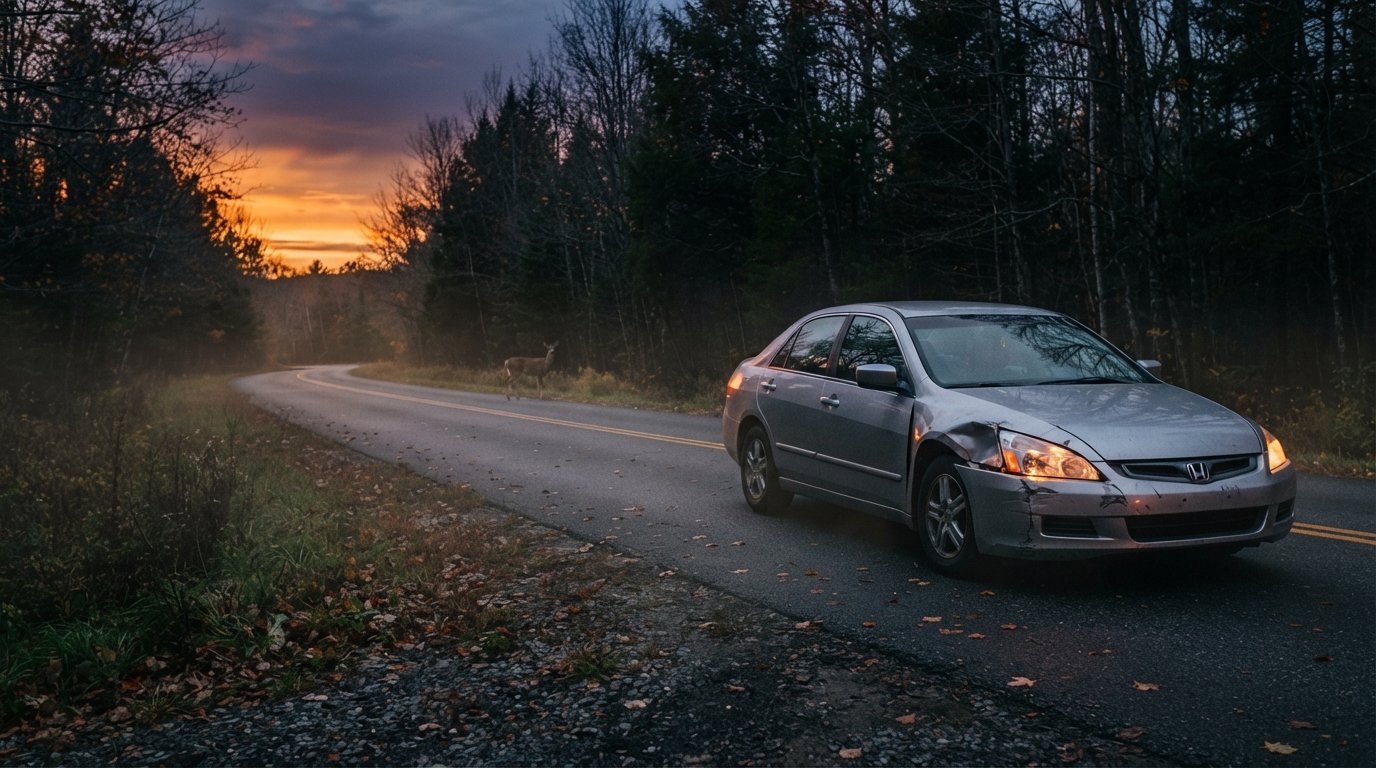
You are driving at dusk on a two-lane road when a deer bolts from the tree line. You swerve, but the animal clips your front fender, leaving a crumpled bumper and a shattered headlight. After the adrenaline fades, the first practical question is simple: will your car insurance pay for this? The answer depends entirely on the type of coverage you carry. A deer collision or any animal strike is treated differently from a typical fender bender with another vehicle, and understanding that distinction can save you thousands of dollars in out-of-pocket repairs. This guide walks you through exactly how insurers classify animal-related damage, how the claims process works, and what you can do to protect yourself before the next close encounter with wildlife.
Why Animal Strikes Fall Under Comprehensive Coverage, Not Collision
Many drivers assume that hitting a deer is a collision claim because, well, a collision occurred. But in the insurance world, the word collision has a narrow definition. Collision coverage pays for damage caused by impact with another vehicle or a stationary object like a guardrail, tree, or mailbox. An animal is neither a vehicle nor a stationary object, so insurers place animal strikes under comprehensive coverage instead. Comprehensive is the portion of your policy that handles damage from events outside your control, such as theft, vandalism, fire, flood, hail, and contact with animals.
This classification matters because your deductible and your premium calculations differ between the two coverage types. If you carry comprehensive coverage, a deer collision is typically covered minus your comprehensive deductible. If you only have collision coverage, the damage from an animal strike is generally not covered at all. That is why reviewing your policy declarations page before an incident is so important. You can check what your current policy includes by requesting a free auto insurance quote comparison through our site, which will show you side-by-side options from multiple carriers.
Some states have specific rules that affect how animal strikes are handled. For example, in Texas, comprehensive coverage is optional but highly recommended for drivers in rural areas where wildlife collisions are common. In New York, insurers must offer comprehensive coverage, but you can decline it in writing. Regardless of your state, the fundamental rule holds: animal strikes belong to comprehensive, not collision. If you are unsure which coverage you have, look for the word "comprehensive" or "other than collision" on your policy documents. That is the coverage that responds to a deer, elk, moose, or even a stray dog darting into your path.
How the Animal Strike Claim Process Differs From a Typical Accident
Filing a claim for a deer collision involves a slightly different workflow than a standard at-fault accident. Because there is no other driver to exchange information with, the burden of proof falls on you to document what happened. Most insurers will ask for a police report or a written statement, photos of the damage and the animal if it is safe to take them, and a description of the location and time. Some insurers may waive the police report requirement for single-vehicle animal strikes, but it is always better to file one if law enforcement is available. A report creates an official record that reduces the chance of disputes later.
Here is a typical sequence of steps for an animal strike claim:
- Ensure safety first. Move your vehicle to the shoulder if possible, turn on hazard lights, and check for injuries. Do not approach a wounded animal.
- Call the police or local game warden. In many areas, law enforcement will document the incident and may handle the animal carcass. This report is valuable for your claim.
- Document the scene. Take clear photos of the damage, the animal if visible, the road conditions, and any nearby signage. Note the time, weather, and location.
- Notify your insurer promptly. Call your carrier's claims line or use their mobile app. Provide the facts and ask about your comprehensive deductible and preferred repair shops.
- Get a repair estimate. Your insurer may send an adjuster or direct you to a network body shop. Keep all receipts and correspondence.
One key difference from a typical accident is that there is no liability investigation. No other driver's insurance is involved, so your own comprehensive coverage responds directly. That also means your claim will not be surcharged as an at-fault accident in most states, because animal strikes are considered no-fault events from a driving-behavior perspective. However, frequency matters: multiple comprehensive claims in a short period can still affect your premium at renewal. If you are comparing rates after a claim, our guide on 2026 rental car insurance coverage updates explains how temporary vehicles and add-on protections interact with your main policy.
Why Liability-Only Policies Leave Animal Damage Unpaid
Liability insurance is the minimum required in most states, and it pays for damage you cause to other people and their property. It does not pay for damage to your own vehicle under any circumstance, including an animal strike. If you carry only liability coverage and hit a deer, you will pay for repairs out of pocket. That can easily run from a few hundred dollars for a bumper cover to several thousand dollars if the animal damages the hood, radiator, and airbags. For drivers in rural or suburban areas with high deer populations, liability-only coverage is a financial gamble that often does not pay off.
Full coverage, which combines liability with comprehensive and collision, is the practical solution for animal strike protection. The cost difference between liability-only and full coverage is often modest, especially when you compare quotes across multiple carriers. Our platform helps you gather free, no-obligation quotes from licensed agents so you can see exactly how much comprehensive coverage would add to your monthly premium. You can also ask about discounts for safe driving, multi-policy bundling, and vehicle safety features, which can offset the cost of adding comprehensive coverage.
It is worth noting that some drivers mistakenly believe their liability policy will cover a deer collision because the animal is not a vehicle. That is not the case. Liability responds only when you are legally responsible for harm to someone else. Your own vehicle is never covered by liability, no matter what caused the damage. If you want protection against animal strikes, you need comprehensive coverage, and that is a conversation worth having with a licensed agent before you find yourself on the side of the road with a damaged car.
Does Avoiding the Animal Change the Claim?
Drivers often ask whether swerving to avoid an animal affects their claim. The short answer is that it can, but not in the way most people expect. If you swerve and hit a guardrail, tree, or another vehicle instead of the animal, your claim may shift from comprehensive to collision. That is because the damage was caused by impact with a stationary object or another vehicle, not the animal itself. Comprehensive coverage would not apply, and you would need collision coverage to pay for the repairs. The same logic applies if you swerve into a ditch: the ditch is a stationary object, so collision coverage, if you have it, would respond.
From a safety perspective, the best advice from wildlife agencies and driving safety experts is to brake firmly and stay in your lane rather than swerve, especially at highway speeds. Swerving can cause you to lose control, cross into oncoming traffic, or roll over, turning a manageable animal strike into a serious multi-vehicle accident. If you do swerve and avoid the animal entirely without any contact, there is no claim at all because there is no damage. If you swerve and hit something else, your collision coverage handles it, and your comprehensive deductible does not apply. Understanding this distinction before an incident helps you make a split-second decision that protects both your safety and your wallet.
Some insurers may investigate whether the damage was truly caused by an animal or by a collision with an object. That is another reason to document the scene thoroughly and file a police report when possible. A clear record of the animal's presence, such as fur, blood, or the animal itself, supports a comprehensive claim and reduces the risk of a dispute. If you are unsure how your policy would handle a swerve-versus-strike scenario, ask your agent directly. For broader consumer guidance on auto insurance topics, including coverage comparisons and educational resources, you can visit NewAutoInsurance, an independent online resource that helps drivers understand their options.
Key Factors That Affect Your Animal Strike Claim Payout
Even when comprehensive coverage applies, several factors influence how much your insurer pays and how smooth the process goes. The first is your deductible. A lower comprehensive deductible means a larger payout but a higher premium, while a higher deductible lowers your premium but increases your out-of-pocket cost at claim time. Many drivers choose a $250 to $500 comprehensive deductible as a balance between affordability and protection. The second factor is your policy limit, though comprehensive coverage typically does not have a separate limit; it pays up to the actual cash value of your vehicle, minus the deductible.
Other factors include whether the damage is considered a total loss, the availability of OEM versus aftermarket parts, and your insurer's network of repair shops. If repairs exceed a certain percentage of your vehicle's value, the insurer may declare it a total loss and pay you the actual cash value instead of repairing it. That payout can be affected by your vehicle's condition, mileage, and local market prices. To avoid surprises, keep maintenance records and photos of your vehicle in good condition, which can support a higher valuation if a total loss occurs.
- Comprehensive deductible: The amount you pay before insurance kicks in; typically $250 to $1,000.
- Actual cash value: Your vehicle's pre-accident market value, which determines total loss payouts.
- Repair shop choice: Network shops may streamline the process, but you generally have the right to choose your own.
- Claim history: Multiple comprehensive claims can affect your premium at renewal.
Understanding these factors helps you set realistic expectations and make informed decisions about your coverage. If you are shopping for a new policy or considering changing your deductible, comparing quotes from multiple insurers is the most effective way to find the right balance for your budget and risk tolerance. Our free quote tool connects you with licensed agents who can explain the trade-offs in plain language.
Practical Steps to Protect Yourself Before the Next Animal Encounter
Preparation is the best defense against the financial shock of an animal strike. Start by reviewing your current policy to confirm whether you have comprehensive coverage and what your deductible is. If you only carry liability, request quotes for full coverage to see the real cost of adding comprehensive and collision. You may find that the increase is smaller than you expected, especially if you qualify for discounts. Next, consider your driving patterns: if you frequently travel on rural roads at dawn or dusk, comprehensive coverage is not optional, it is essential.
Beyond insurance, adopt safe driving habits around wildlife. Scan the road edges, use high beams when appropriate, and slow down in areas marked with deer crossing signs. Remember that deer often travel in groups, so if you see one, others may follow. If a collision is unavoidable, brake firmly and stay in your lane rather than swerving. After any incident, document everything and contact your insurer promptly. For personalized help comparing policies and finding affordable comprehensive coverage, call (833)-275-7533 to speak with a licensed agent who can walk you through your options.
Animal strikes are unpredictable, but the financial fallout does not have to be. By understanding that deer collisions and other animal strikes fall under comprehensive coverage, knowing how the claims process works, and choosing the right deductible, you can protect yourself and your vehicle. Take a few minutes today to review your policy and, if needed, compare quotes from multiple carriers. A little preparation now can save you thousands of dollars and a lot of stress later.