
Does Car Insurance Cover Theft of Catalytic Converter or Rims?
Does car insurance cover theft of catalytic converter or rims? Comprehensive coverage usually does, minus your deductible. Call (833)-275-7533 to compare quotes.

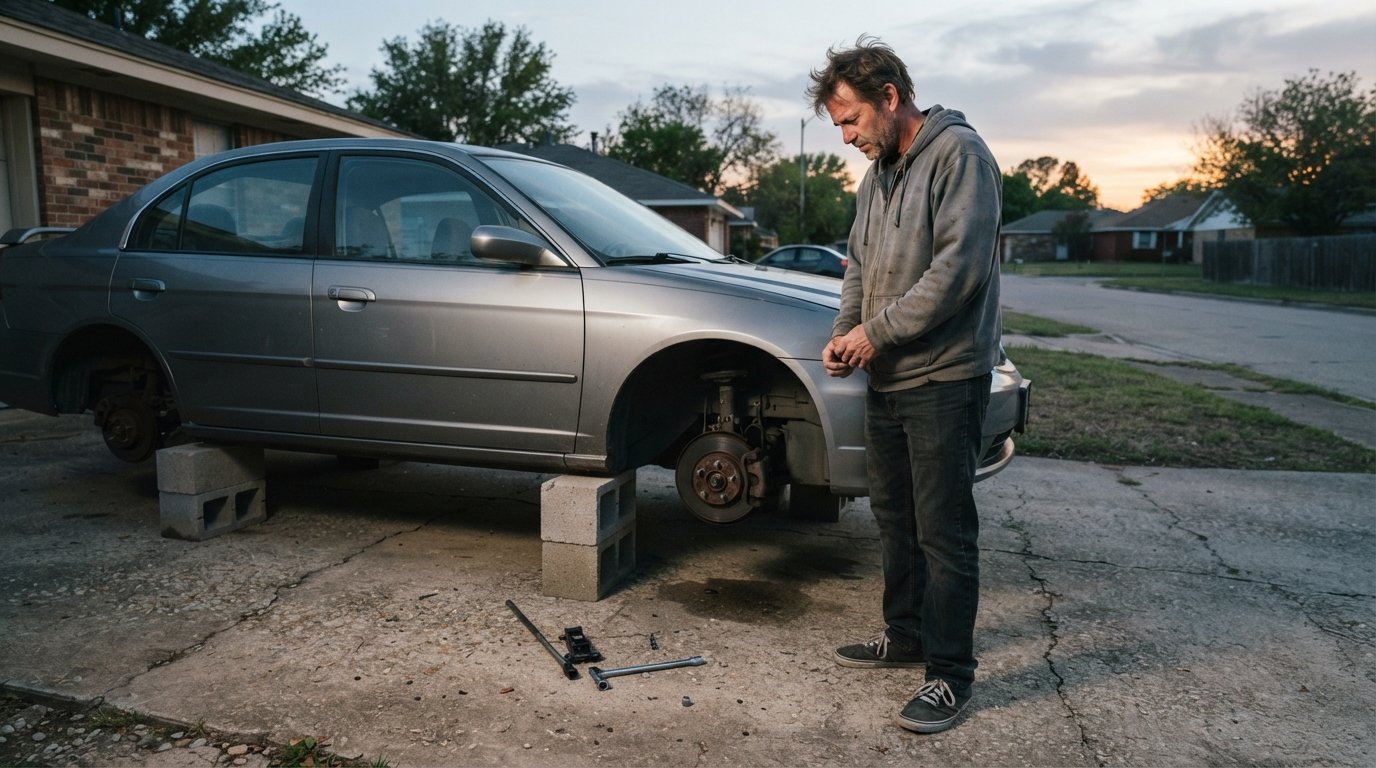
You walk out to your car in the morning, turn the key, and hear a roar that sounds like a race track instead of a quiet commute. Or you glance at your vehicle and notice it is sitting on cinder blocks because your rims and tires are gone. Part theft is a frustrating and increasingly common reality for drivers across the United States. When it happens, the first question is almost always the same: does car insurance cover theft of catalytic converter or rims? The short answer is often yes, but the details matter far more than a simple yes or no. The coverage that responds to these thefts is not the liability portion of your policy. Instead, you will need to look at your comprehensive coverage, understand how your deductible works, and be ready to document the loss properly. Without the right coverage in place, you could be left paying the entire replacement cost out of pocket, which for a catalytic converter can easily exceed one thousand dollars and for a set of factory rims can climb even higher.
This guide breaks down exactly how insurance treats stolen catalytic converters and rims, what steps you need to take to file a successful claim, and when you might need to add extra coverage for aftermarket parts. We will also explain how your deductible interacts with a parts-only theft and why some drivers end up disappointed with their claim outcome even when they have comprehensive coverage. By the end, you will know whether your current policy protects you and what to do if it does not.
Why Comprehensive Coverage Is the Key to Theft Claims
The reason so many drivers are confused about whether car insurance covers stolen parts is that they are thinking about the wrong coverage type. Liability insurance, which is required in nearly every state, pays for damage you cause to other people and their property. It does not pay for damage to your own vehicle, and it certainly does not pay for your own vehicle being stolen from you. Collision coverage pays when your car hits something or is hit by another vehicle, but theft is not a collision. The coverage that responds to theft, vandalism, fire, and other non-collision events is comprehensive coverage. If you want protection against a stolen catalytic converter or stolen rims, comprehensive is the line item on your policy that matters.
Comprehensive coverage is almost always optional unless your vehicle is financed or leased. Lenders and leasing companies typically require both collision and comprehensive coverage to protect their interest in the vehicle. If you own your car outright and chose to carry only liability insurance to save money, you likely have no coverage for stolen parts. That is a critical distinction because a catalytic converter theft can cost between five hundred and three thousand dollars depending on the vehicle and the local labor rates, while a set of four factory rims can run well over two thousand dollars. Understanding what your policy actually includes is the first step toward protecting yourself. For a broader look at the gaps that can appear in a standard policy, our guide on what car insurance does not cover outlines common exclusions that every driver should review.
It is also worth noting that comprehensive coverage follows the vehicle, not the location. If your catalytic converter is stolen while your car is parked at your apartment complex, at a trailhead, or on a public street, the claim is still handled under your comprehensive coverage. The same applies to rims and tires stolen from your driveway. The key is that the loss must be due to a covered peril, and theft is a named peril under comprehensive coverage. The only major exceptions are if the theft was committed by someone in your household or if you misrepresented the facts of the loss, which would fall under fraud rather than a coverage dispute.
How Your Deductible Affects a Parts-Only Theft Claim
Even when you have comprehensive coverage, the deductible is the part of the loss you pay before the insurer pays anything. This is where many drivers get a surprise. A deductible is not a fee that the insurer waives for theft claims. It is a fixed amount that comes out of the total covered loss. If your catalytic converter is stolen and the replacement cost is one thousand two hundred dollars, and you have a five hundred dollar comprehensive deductible, your insurer will pay seven hundred dollars after you cover the first five hundred. That math works in your favor. But if the replacement cost is only six hundred dollars and your deductible is one thousand dollars, you would receive nothing because the loss does not exceed your deductible. This scenario is more common than you might think, especially for older vehicles with lower-value catalytic converters or for a single stolen rim rather than a full set.
Here is a simple framework to evaluate whether filing a claim makes sense for a parts theft:
- Estimate the total repair or replacement cost using a repair shop quote or dealership estimate, not a guess.
- Compare that figure to your comprehensive deductible to see whether there is a meaningful gap.
- Consider the long-term premium impact because a comprehensive claim can affect your rate at renewal, though theft claims are generally treated more favorably than at-fault collision claims.
- Check for a separate theft deductible because some policies apply a different deductible to theft losses than to other comprehensive claims.
Once you have those numbers, you can make an informed decision. Filing a claim for a loss that barely exceeds your deductible may not be worth the potential premium increase, but filing for a loss that is several times your deductible usually is. The important thing is to avoid assuming that comprehensive coverage means the insurer pays the full bill with no out-of-pocket cost. The deductible always applies, and it applies per claim, not per part. If both your catalytic converter and your rims are stolen in the same incident, you pay one deductible for that single claim, which is a small silver lining in an otherwise bad situation.
Documentation and Police Report Steps That Support a Theft Claim
Insurance companies do not pay theft claims based on a phone call alone. They need evidence that the loss occurred, that the stolen items were actually on the vehicle, and that the cost to replace them is reasonable. The single most important step you can take is to file a police report immediately. Most insurers require a police report for any theft claim, and some states have laws that require it as well. The report creates an official record of the incident, which reduces the chance of a dispute later. When you file the report, be specific about what was stolen. A vague report that says "parts stolen" is less useful than one that lists a catalytic converter and four alloy rims with an estimated value.
Beyond the police report, you should gather the following documentation to support your claim:
- Photographs of the damage showing the empty space where the converter was cut out or the vehicle resting on blocks without its rims.
- Repair estimates from a licensed shop or dealership that itemize the parts and labor required to restore the vehicle.
- Proof of ownership for any aftermarket parts, such as receipts, product registration cards, or photographs showing the parts installed on the car before the theft.
- Your policy number and claim number once the claim is opened, so you can track the process and respond to adjuster requests quickly.
After you have those items, contact your insurer to open the claim. An adjuster will review the police report and the estimates, and may send an inspector to view the vehicle. Keep the damaged vehicle in a secure location until the inspection is complete. Do not install replacement parts before the adjuster has seen the damage, because that can complicate the claim. If the theft happened in a parking garage or apartment lot, ask the property manager whether security camera footage is available. Footage is not required, but it can strengthen your claim and speed up approval. The more organized your documentation, the smoother the process will be, and the less likely you are to face a denial or a reduced payout.
Aftermarket Rims, Custom Wheels, and Added Coverage
Factory rims and catalytic converters are generally covered under a standard comprehensive policy up to the vehicle's actual cash value or the policy limits. Aftermarket parts are a different story. If you installed custom wheels, a performance exhaust, or a high-flow catalytic converter, your standard policy may only pay for the original factory equipment, not the upgraded parts. That means if you spent three thousand dollars on a set of aftermarket rims and they are stolen, your insurer might pay only the cost of the standard factory rims, leaving you with a significant gap. This is one of the most common reasons drivers feel let down by their insurance after a theft.
The solution is to add custom parts and equipment coverage, sometimes called CPE coverage, to your policy. This endorsement increases your coverage limit for aftermarket accessories and ensures that the insurer will pay to replace the upgraded parts rather than the factory originals. It typically applies to wheels, stereo systems, lift kits, and other modifications. You will usually need to provide receipts or photographs to establish the value of the parts when you add the coverage. If you have any doubt about whether your aftermarket rims are fully protected, call your agent and ask specifically about the custom equipment limit on your policy. It is a small addition to your premium that can save you thousands if your vehicle is targeted.
Catalytic converter theft has risen sharply in recent years because the precious metals inside the converter, including platinum, palladium, and rhodium, have high scrap value. Thieves can cut a converter out in under two minutes with a reciprocating saw, which makes parking lots and street parking prime targets. Rims are also attractive because they are easy to resell and relatively easy to remove. If you live in an area with high theft rates, comprehensive coverage is not just a nice-to-have; it is essential protection. Drivers who want to compare options for comprehensive coverage and find affordable rates can start by requesting personalized quotes from multiple carriers. A service like NewAutoInsurance provides educational resources and comparison tools that help vehicle owners understand their coverage choices and find potential savings without any obligation to buy.
What to Do If Your Insurer Denies the Claim
Not every theft claim is approved, and a denial is not always the final word. If your insurer denies a claim for a stolen catalytic converter or rims, the first step is to ask for the denial in writing and read the specific reason carefully. Common reasons include a lapsed policy, a deductible that exceeds the loss, a policy exclusion for aftermarket parts, or missing documentation. Once you understand the reason, you can respond with additional evidence. For example, if the denial was based on a lack of proof that the aftermarket rims were on the vehicle, you can submit photographs and receipts. If the denial was based on a policy exclusion, you can ask the adjuster to explain exactly which policy language applies and whether an endorsement could have covered the loss.
If the dispute cannot be resolved with the adjuster, you can escalate to a supervisor or file a complaint with your state's department of insurance. Most states have a consumer services division that handles complaints about claim handling. You can also request an independent appraisal if you disagree with the insurer's valuation of the stolen parts. The appraisal process varies by state, but it generally involves hiring an independent appraiser to assess the loss. Keep in mind that the cost of an appraisal may not be covered by the insurer if the claim is denied, so weigh that cost against the value of the loss. In many cases, a polite but firm letter that cites the policy language and includes the missing documentation is enough to get a denial reversed.
Prevention is also worth discussing with your insurer. Some companies offer discounts for anti-theft devices, and a comprehensive policy may already include coverage for a vehicle recovery system. If you park in a high-theft area, consider a catalytic converter protection shield, which is a metal plate that makes the converter much harder to cut out. For rims, locking lug nuts are a low-cost deterrent that can slow a thief down. These measures do not replace insurance, but they reduce the chance that you will need to file a claim in the first place. When you review your policy, ask your agent whether any safety or anti-theft discounts apply to your vehicle, because those savings can offset the cost of comprehensive coverage.
Frequently Asked Questions About Parts Theft Coverage
Does liability insurance cover a stolen catalytic converter?
No. Liability coverage pays for damage you cause to others, not for damage to your own vehicle. You need comprehensive coverage for theft of any part of your own car.
Will comprehensive coverage pay for a stolen catalytic converter if I have a high deductible?
It will pay up to the covered loss minus your deductible. If the replacement cost is lower than your deductible, the insurer pays nothing. Always compare the repair estimate to your deductible before filing.
Are aftermarket rims covered under a standard policy?
Usually only up to the value of the factory equipment. To protect the full value of custom wheels, you need custom parts and equipment coverage added to your policy.
Do I need a police report to file a theft claim?
Most insurers require one, and some states mandate it. File the report as soon as you discover the theft and provide the report number to your insurer.
Will a theft claim raise my premium?
It can, but comprehensive claims are generally treated less harshly than at-fault collision claims. The impact varies by insurer and state, so ask your agent about the potential effect before you file.
Knowing whether car insurance covers theft of a catalytic converter or rims comes down to one coverage type: comprehensive. If you have it, the claim is likely covered subject to your deductible and policy limits. If you do not have it, you are paying for the loss yourself. Take a few minutes to review your declarations page, confirm your comprehensive deductible, and check whether your aftermarket parts are fully protected. That small amount of preparation can make a stressful situation much easier to handle, and it can save you from an unwelcome financial surprise when you need your policy the most.