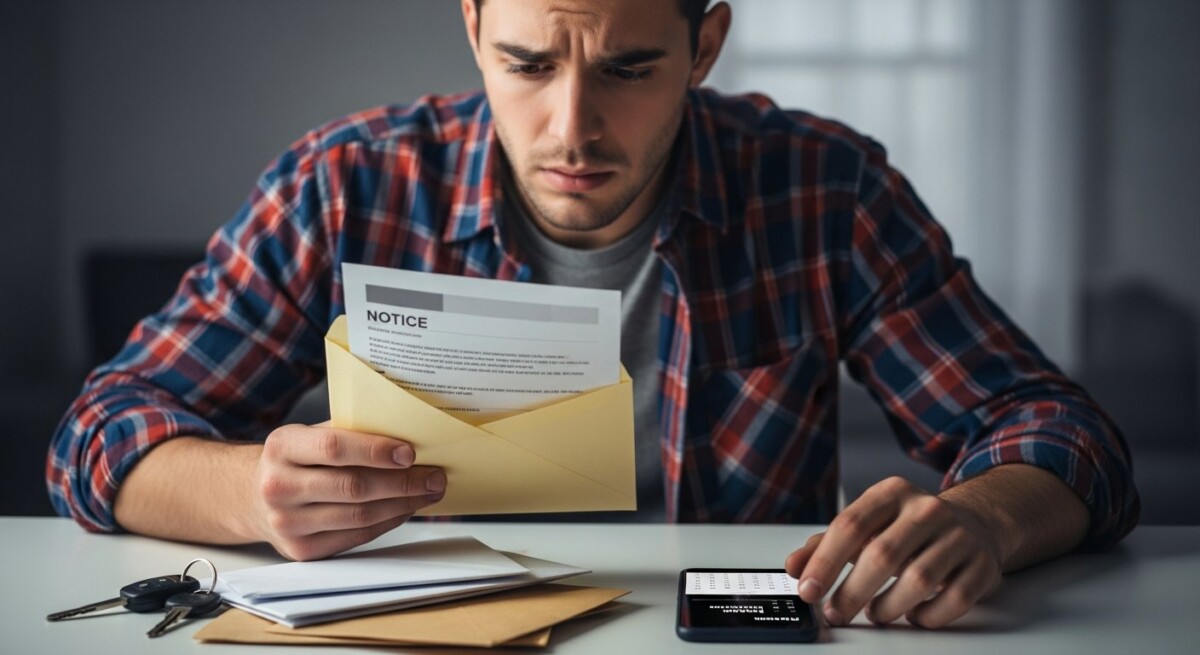
You open your mailbox or check your email and see a notice from your insurance company. Your payment was due three days ago. Your stomach drops as you realize you forgot to pay your auto insurance bill. Now you are wondering what happens if you miss a payment on your auto insurance. Will your coverage disappear instantly? Will you face fees? Can your insurer drop you? The answers depend on your state, your insurer, and how quickly you act. This guide walks through every stage of a missed payment, from the first grace period to potential cancellation, and shows you exactly what steps to take to protect yourself.
The Immediate Aftermath of a Missed Payment
Most auto insurance policies include a grace period. This is a short window after the due date during which your coverage remains active even though you have not paid. Grace periods typically range from 7 to 30 days, depending on your state laws and your insurer’s policies. During this time, you can still file a claim if you get into an accident. Your insurer will likely send you reminders via mail, email, or text message. However, do not assume you have a full 30 days. Some insurers offer no grace period at all, especially for high-risk drivers or those with prior lapses. Check your policy documents or call your agent to confirm your specific grace period length.
If you pay within the grace period, you usually avoid any late fees or penalties. Some insurers charge a small late fee, often between $5 and $50, even if you pay during the grace window. The missed payment may also trigger a temporary suspension of certain policy benefits, such as roadside assistance or rental car coverage. Your base liability and collision coverage should remain intact during the grace period. But you should never rely on the grace period as a planned extension of your due date. Treat it as the emergency buffer it is designed to be.
When Does Your Coverage Actually Lapse?
If you do not pay by the end of the grace period, your policy lapses. A lapse means your insurance coverage stops entirely. Your insurer will send you a cancellation notice, usually by certified mail, stating the exact date your coverage ends. At this point, you are driving without insurance. This is illegal in nearly every state. If you are caught driving without insurance, you face fines, license suspension, and even vehicle impoundment. According to the Insurance Information Institute, the average fine for a first offense ranges from $100 to $500, but repeat offenses can cost thousands of dollars.
Driving without insurance also exposes you to massive financial risk. If you cause an accident during a lapse, you are personally responsible for all damages, medical bills, and legal fees. A single serious accident can easily result in a lawsuit exceeding $100,000. Your personal assets, including your home, savings, and future wages, could be at risk. In our guide on accident without insurance: what happens next?, we explain the severe consequences in detail, including how judgments can follow you for years through wage garnishment and liens.
Reinstatement vs. New Policy: Two Paths Forward
If you miss the grace period, you have two options to get back on the road legally. The first is reinstatement. Many insurers allow you to reinstate your old policy within a certain window after cancellation, often 30 to 60 days. To reinstate, you must pay all past-due premiums plus any late fees or reinstatement fees. Your coverage resumes without a gap in your insurance history, which is important for keeping your rates low. However, not all insurers offer reinstatement. Some automatically convert a missed payment into a full cancellation, forcing you to apply for a brand-new policy.
The second option is applying for a new policy with a different insurer. This process is similar to your original application. You will need to provide your driving history, vehicle information, and details about the lapse. Insurers view a lapse in coverage as a red flag. Statistics show that drivers with a lapse are more likely to file claims. As a result, you will likely pay higher premiums for a new policy. Some insurers may even refuse to cover you for a period of time after a lapse. This is why reinstating your old policy is almost always the better choice if it is available.
How Lapses Affect Your Insurance Rates
A lapse in coverage can raise your premiums by 20% to 50% or more. The exact increase depends on the length of the lapse, your state, and your driving record. A lapse of 30 days or less might result in a moderate surcharge. A lapse of six months or longer can classify you as a high-risk driver, leading to dramatically higher rates. Some insurers use a tiered system where the rate increase grows with each day of missed coverage. For example, a lapse of 1 to 30 days might add a 15% surcharge, while a lapse of 31 to 60 days could add 30%. These surcharges typically stay on your record for three to five years.
Young drivers, new drivers, and those with prior accidents or tickets face even steeper increases after a lapse. If you are a young driver looking for affordable coverage, maintaining continuous insurance is one of the most effective ways to keep your premiums low. A single lapse can undo years of careful driving and discount accumulation. The financial impact of a lapse often exceeds the original missed payment by a wide margin, making it a costly mistake to ignore.
State-Specific Consequences of a Lapse
Each state has its own laws regarding insurance lapses. Most states require insurers to report lapses to the Department of Motor Vehicles (DMV). The DMV then assesses penalties. Common state penalties include:
- Fines ranging from $50 to $500 for a first offense
- Suspension of your vehicle registration until you provide proof of new insurance
- Suspension of your driver’s license for repeat offenses
- Requirement to file an SR-22 form, which proves you carry minimum liability coverage
- Higher fees to reinstate your license or registration after suspension
An SR-22 is not an insurance policy. It is a certificate your insurer files with the state to verify you have the required coverage. Drivers who need an SR-22 often pay significantly higher premiums because they are classified as high-risk. The SR-22 requirement typically lasts three years. If you let your insurance lapse again during that period, the state can immediately suspend your license again. This creates a cycle that is difficult and expensive to break. To avoid this, set up automatic payments or calendar reminders for every premium due date.
How to Prevent a Missed Payment
The best way to handle a missed payment is to prevent it from happening in the first place. Modern insurance companies offer several tools to help you stay on track. Most insurers allow you to set up automatic monthly payments from a bank account or credit card. This is the simplest and most reliable method. You never have to remember a due date. Just ensure you have sufficient funds in your account on the payment date. A failed automatic payment due to insufficient funds can trigger the same penalties as a missed manual payment.
You can also enroll in paperless billing and text alerts. These services send you a reminder a few days before your payment is due. Some insurers offer a small discount, often 1% to 5%, for enrolling in automatic payments or paperless statements. This discount can offset the cost of any potential late fees. If you are struggling to afford your premium, contact your insurer before the due date. Many companies offer payment plan extensions or temporary hardship programs, especially for long-term customers. It is always better to ask for help than to let your policy lapse.
What to Do If You Already Missed a Payment
If you are reading this after missing a payment, do not panic. Follow these steps immediately:
- Check your grace period status. Call your insurer or log into your online account to see if you are still within the grace period. If you are, pay the full amount due right away. Use a credit card or electronic check for instant processing.
- If the grace period has passed, ask about reinstatement. Explain the situation to a customer service representative. Be honest about why you missed the payment. Some insurers offer a one-time reinstatement as a courtesy.
- If reinstatement is not possible, shop for a new policy immediately. Do not drive until you have active coverage. Use a comparison platform like Free Auto Insurance Quotes Online to get quotes from multiple carriers. This helps you find the best rate despite the lapse on your record.
- Request a written confirmation. Once you pay or reinstate, ask for a confirmation letter or email. Keep this document in your glove compartment as proof of insurance until you receive your new insurance card.
Time is critical. Every day you drive without insurance increases your legal and financial exposure. Even a short trip to the grocery store can result in a ticket, an accident, or worse. If you live in a state like Mississippi or Missouri, where insurance requirements are strictly enforced, the stakes are even higher. Our guides on auto insurance Mississippi and auto insurance Missouri provide state-specific details on penalties and reinstatement procedures.
Frequently Asked Questions About Missed Auto Insurance Payments
Can my insurance company cancel my policy for one missed payment?
Yes, your insurer can cancel your policy if you do not pay by the end of the grace period. Most states require insurers to provide written notice before cancellation, typically 10 to 30 days in advance. Once the policy is canceled, you must apply for new coverage.
Will a missed payment affect my credit score?
Auto insurance companies generally do not report missed payments to the major credit bureaus (Equifax, Experian, TransUnion) unless the debt goes to a collections agency. If your unpaid premium is sent to collections, it can appear on your credit report and lower your score by 50 to 100 points.
How long does a lapse in coverage stay on my record?
Insurance companies typically look at your coverage history for the past three to five years. A lapse of 30 days or less may be overlooked by some insurers after one year. Longer lapses can affect your rates for up to five years.
Can I get insurance with a lapse on my record?
Yes, you can still get insurance after a lapse, but you will likely pay higher premiums. Some insurers specialize in high-risk drivers and offer policies specifically for people with lapses. These policies cost more, but they provide the legal coverage you need to drive.
What happens if I get into an accident during the grace period?
Your insurance should still cover the accident if you are within the grace period. However, the insurer may deduct any unpaid premium from your claim payout. If you fail to pay after the claim, the insurer may cancel your policy immediately.
Missing an auto insurance payment is stressful, but it does not have to derail your finances or your driving privileges. The key is to act quickly. Pay as soon as you realize your mistake, ask about reinstatement if the grace period has passed, and never drive without active coverage. If you need to find a new policy after a lapse, compare quotes from multiple insurers to find the most affordable option. Our platform at Free Auto Insurance Quotes Online makes it easy to get free, no-obligation quotes from top carriers. Remember, continuous coverage protects your wallet, your legal standing, and your peace of mind. If you have questions about your specific situation, call us at 833-275-7533 for personalized assistance.