
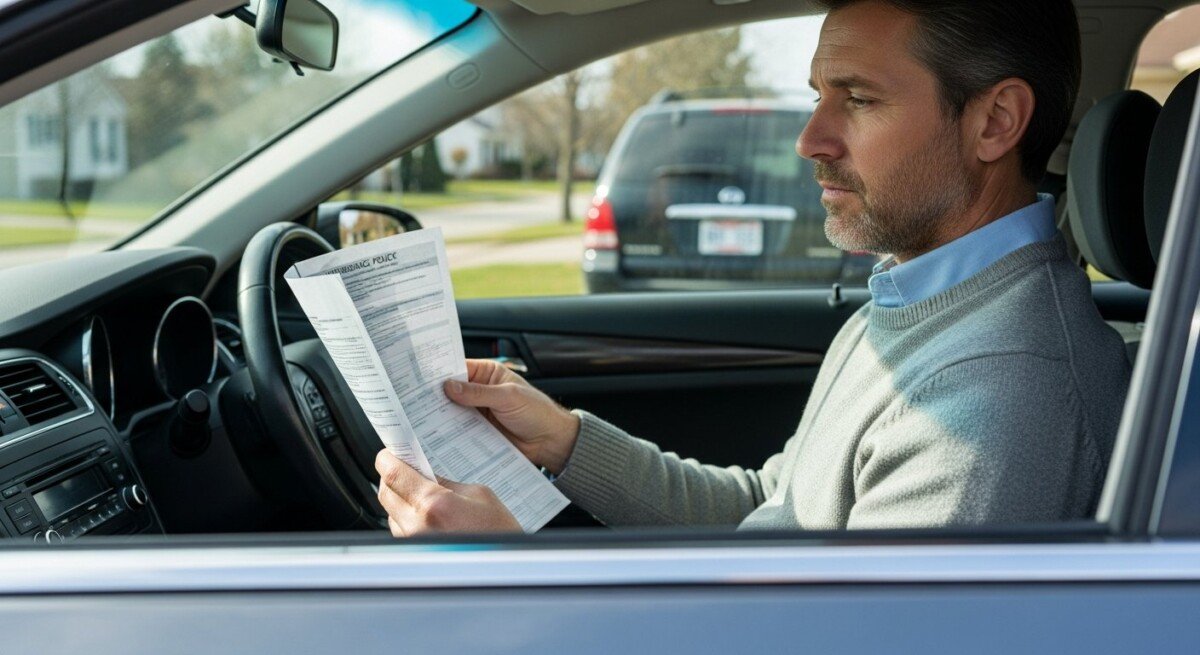
Ohio Auto Insurance: A Driver’s Guide to Coverage and Savings
Understand Ohio’s auto insurance laws and find the right coverage to protect yourself financially. Call 833-275-7533 for personalized guidance.

By Oliver Turner
Driving in Ohio requires more than just a valid license and a reliable vehicle, it requires financial responsibility. Understanding the intricacies of Ohio auto insurance is not just about meeting a legal mandate, it’s about securing your financial future against the unpredictable nature of the road. From the bustling streets of Columbus to the rural routes of Appalachia, the right policy acts as a critical safety net. This guide will navigate you through Ohio’s specific requirements, explain the coverage options that matter most, and reveal practical strategies to protect your assets without overpaying.
Ohio’s Mandatory Auto Insurance Requirements
Ohio law establishes minimum liability insurance limits that every driver must carry. These limits are often expressed as 25/50/25. This means your policy must provide at least $25,000 for bodily injury per person, $50,000 for total bodily injury per accident, and $25,000 for property damage per accident. It is crucial to understand that these are only the state-mandated minimums. In a serious accident, medical bills and vehicle repair costs can easily exceed these amounts, potentially leaving you personally responsible for the difference. Therefore, treating these minimums as a starting point, not a recommendation, is a key principle of sound financial planning for any Ohio motorist.
Beyond the basic liability coverage, Ohio operates under a “fault” system for car accidents. This means the driver who is found to be at fault for causing the accident is financially responsible for the resulting damages. Your liability insurance is designed to cover these costs for others when you are at fault. However, to cover your own injuries or vehicle damage, you would need to file a claim against the at-fault driver’s insurance, pursue a personal injury lawsuit, or rely on additional coverages from your own policy. This system underscores why carrying only the minimum liability can be a significant risk. For a deeper comparison of how different state systems work, our analysis of auto insurance in Massachusetts highlights another approach.
Essential and Recommended Coverage Options
While liability insurance is legally required, a comprehensive Ohio auto insurance policy includes several other coverages that provide vital protection for you and your vehicle. Collision coverage pays for damage to your own car resulting from a collision with another vehicle or object, regardless of who is at fault. Comprehensive coverage handles damage from non-collision events like theft, vandalism, fire, hail, or hitting an animal. If you have a loan or lease on your vehicle, your lender will almost certainly require both collision and comprehensive coverage.
Perhaps one of the most important additions is uninsured/underinsured motorist (UM/UIM) coverage. Despite laws requiring insurance, many drivers on Ohio roads are uninsured or carry only the minimal limits. If one of these drivers hits you, your UM/UIM coverage can pay for your medical expenses, lost wages, and pain and suffering. Given the prevalence of underinsured drivers, this coverage is highly recommended. Medical payments or personal injury protection (PIP) can cover medical expenses for you and your passengers after an accident, regardless of fault. Other valuable add-ons include roadside assistance, rental car reimbursement, and gap insurance for newer vehicles.
Factors That Determine Your Ohio Auto Insurance Rates
Insurance companies use a complex algorithm to assess risk and determine your premium. Your driving record is the most significant factor you control. A history of accidents, speeding tickets, or DUIs will lead to substantially higher costs. Your age and experience also play a major role, with young, inexperienced drivers facing the highest rates. Where you live in Ohio impacts your premium, as insurers consider population density, crime rates, and accident statistics in your ZIP code. The vehicle you drive matters too, sports cars and luxury vehicles typically cost more to insure than safe, family-oriented models due to repair costs and theft rates.
Your credit-based insurance score is another key element in Ohio. Insurers have found a correlation between credit history and the likelihood of filing a claim. Maintaining good credit can lead to lower premiums. Finally, your chosen coverage limits, deductibles, and the discounts you qualify for will directly affect your final bill. To explore discounts commonly available to specific groups, such as mature drivers, our AARP auto insurance review details potential savings opportunities.
A Strategic Guide to Shopping for Insurance in Ohio
Finding the best Ohio auto insurance policy requires a proactive and informed approach. Start by gathering your current policy information and driver’s license details. Then, you need to get quotes from multiple insurers. Rates can vary dramatically between companies for the same driver, so comparison shopping is non-negotiable. When requesting quotes, be consistent. Provide identical coverage limits and deductibles to each company to ensure you are comparing equivalent policies. It is wise to get quotes for higher liability limits than the state minimum to understand the real cost of better protection.
Once you have several quotes in hand, look beyond the price. Research the company’s financial strength through ratings from agencies like A.M. Best, and read customer reviews about their claims handling process. A cheap policy is of little value if the company is difficult to work with when you need them most. Before finalizing your purchase, ask the agent to review all discounts you may be eligible for. Common discounts in Ohio include those for safe driving, bundling home and auto policies, paying in full, having safety features on your vehicle, and being a good student. For a broader look at providers and available discounts in the state, our resource on auto insurance Ohio providers offers valuable insights.
Steps to Take After an Accident in Ohio
Knowing what to do immediately after a collision can protect your safety and strengthen your insurance claim. First, ensure everyone is safe. Move vehicles out of traffic if possible and turn on hazard lights. Call 911 to report the accident, especially if there are injuries or significant property damage. This creates an official police report, which is a critical document for your insurer. Exchange information with the other driver(s), including names, contact details, insurance company, and policy number. Use your smartphone to take extensive photos and videos of the scene, vehicle damage, license plates, and any visible injuries.
Limit your discussion about the accident. Do not admit fault or make speculative statements about what happened, even if you think you are to blame. Stick to the facts when speaking with the other party and the police. Notify your insurance company as soon as possible to start the claims process. Provide them with all the information and evidence you collected. Be cooperative but also keep detailed records of all conversations and correspondence related to the claim. If you are a driver over 50, understanding how insurers handle claims for mature drivers can be beneficial, as discussed in our comprehensive AARP auto insurance review.
Frequently Asked Questions About Ohio Auto Insurance
What happens if I’m caught driving without insurance in Ohio? Penalties are severe and can include driver’s license and license plate suspension, fines, and vehicle impoundment. You will also be required to file an SR-22 form, a certificate of financial responsibility, for several years, which leads to much higher insurance premiums.
Can my insurance company cancel my policy? Yes, but only for specific reasons outlined in Ohio law, such as non-payment of premium, fraud, or suspension of your driver’s license. They cannot cancel a policy that has been in force for over 60 days arbitrarily.
What is an SR-22, and who needs it? An SR-22 is not insurance, it is a form filed by your insurance company with the Ohio Bureau of Motor Vehicles (BMV) to prove you carry the required minimum liability insurance. It is typically required after serious violations like a DUI or driving without insurance.
How does a deductible work? A deductible is the amount you agree to pay out-of-pocket toward a covered claim before your insurance pays. For example, if you have a $500 deductible and a covered repair costs $2,000, you pay $500 and your insurer pays $1,500. Choosing a higher deductible usually lowers your premium.
Does my policy cover me if I drive for a rideshare service like Uber? Most personal auto policies exclude coverage when you are driving for a commercial purpose, including ridesharing. You need to check with your insurer about a specific rideshare endorsement or a commercial policy to ensure you are covered during all phases of the trip.
Securing the right auto insurance in Ohio is a fundamental aspect of responsible vehicle ownership. By moving beyond the bare minimum requirements, carefully evaluating your personal risk, and shopping strategically, you can obtain a policy that offers robust protection and peace of mind. Regular policy reviews, especially after major life events, ensure your coverage continues to align with your needs as you navigate the roads ahead.