
What Is Comprehensive Auto Insurance and Do You Need It?
Comprehensive auto insurance covers vehicle damage from theft, vandalism, and natural disasters. Call 833-275-7533 to discuss your coverage options.

By Imogen Clarke
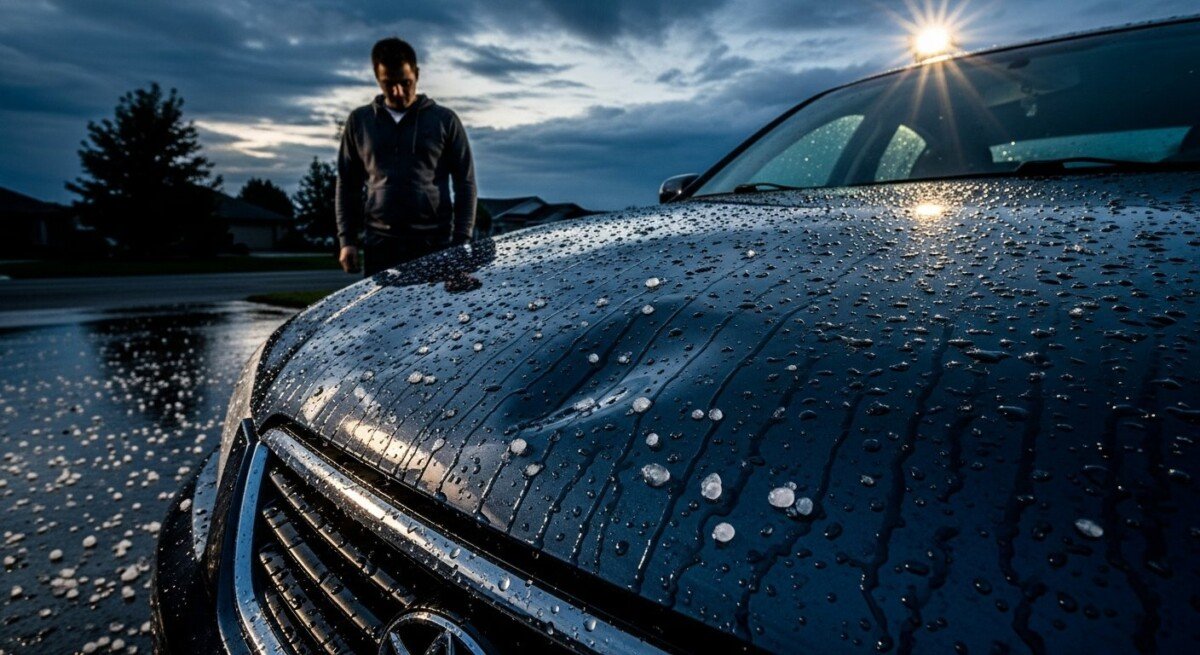
Your car is parked safely in your driveway when a sudden hailstorm pelts the neighborhood, leaving a dimpled pattern across your hood and roof. Or perhaps you return to a parking spot to find a shattered window and your laptop bag missing. These are not accidents involving another vehicle, yet they can result in thousands of dollars in damage. This is where auto insurance comprehensive coverage steps in, acting as a financial shield against a wide array of unpredictable and often unavoidable perils. Unlike collision insurance, which covers impacts with another car or object, comprehensive coverage is about protecting your vehicle from almost everything else. Understanding its scope, limitations, and value is crucial for building a complete and sensible auto insurance policy that guards your investment from life’s surprising events.
Defining Comprehensive Coverage: Beyond Collisions
Comprehensive coverage, often called “other than collision” coverage, is an optional portion of an auto insurance policy that pays for damage to your vehicle caused by events outside of a traffic accident. It is fundamentally about fortifying your financial position against random acts of nature, crime, and misfortune. When you purchase this coverage, you select a deductible, which is the amount you agree to pay out-of-pocket toward a repair before your insurance kicks in. Choosing a higher deductible typically lowers your premium, while a lower deductible means you pay less at the time of a claim but more in monthly or semi-annual payments. It is important to note that comprehensive coverage does not cover damage to another person’s vehicle or property, nor does it cover medical bills. Those are the domains of liability and personal injury protection coverages. For a broader look at how all coverages fit together, our complete guide to auto insurance breaks down each component in detail.
What Does Comprehensive Auto Insurance Actually Cover?
The list of perils covered under a comprehensive policy is extensive, designed to address the myriad non-collision threats your vehicle faces. While specific policy language can vary by insurer and state, standard comprehensive coverage typically includes damage from the following causes.
- Theft: This includes the theft of the entire vehicle or its parts (like catalytic converters, wheels, or airbags). If your car is stolen and not recovered, comprehensive coverage will reimburse you for its actual cash value, minus your deductible.
- Vandalism: Keyed paint, slashed tires, broken windows, and graffiti are common examples. The coverage pays for repairs to restore your vehicle.
- Fire: Damage resulting from any fire, whether from an electrical fault in your car, a wildfire, or arson, is covered.
- Natural Disasters: This is a broad category encompassing hail, windstorms, hurricanes, tornadoes, floods, and earthquakes. Hail damage is one of the most frequent comprehensive claims.
- Falling Objects: This includes tree limbs falling during a storm, rocks tumbling down a hillside, or even items falling from an overpass or another vehicle.
- Animal Collisions: Hitting an animal, such as a deer, elk, or moose, is a comprehensive claim, not a collision claim. This is a critical distinction many drivers misunderstand.
- Glass Damage: While often a result of vandalism or falling objects, many policies offer specific glass coverage with a zero deductible option for windshield repair or replacement, even if the rest of the comprehensive deductible is higher.
It is vital to review your policy’s exclusions. Typical exclusions might include wear and tear, mechanical breakdown, freezing, or damage from pets or other animals inside the vehicle. Understanding these boundaries ensures you have realistic expectations when filing a claim.
Comprehensive vs. Collision: Understanding the Critical Difference
Confusion between comprehensive and collision coverage is common, yet the distinction is straightforward and essential for knowing what your policy will pay for. Collision coverage applies when your vehicle is in motion and hits, or is hit by, another vehicle or object. This includes accidents with other cars, collisions with stationary objects like a guardrail, lamp post, or tree, and single-car accidents like rolling over. The key factor is impact during operation. Comprehensive coverage, as detailed, applies to events that occur largely while your vehicle is stationary or to non-collision events while moving (like hitting an animal). If you are financing or leasing your vehicle, your lender will almost certainly require you to carry both comprehensive and collision coverage, often abbreviated as “full coverage,” to protect their financial interest in the asset. Once you own the car outright, carrying both becomes a personal financial decision based on the vehicle’s value and your risk tolerance. For mature drivers evaluating their coverage needs, our AARP auto insurance review explores how insurers tailor policies for different life stages.
When Is Comprehensive Coverage a Wise Investment?
Deciding whether to add comprehensive coverage to your policy is a cost-benefit analysis. The primary factor is your vehicle’s actual cash value (ACV). The ACV is the market value of your car at the time of a total loss, accounting for age, mileage, and condition. If the cost of comprehensive coverage (the annual premium) plus your chosen deductible approaches or exceeds 10% of your car’s ACV, the coverage may no longer be cost-effective. For example, if your car is worth $3,000 and your annual comprehensive premium is $400 with a $500 deductible, a total loss would only net you $2,100 from the insurer ($3,000 ACV minus $500 deductible). You would have paid $400 for that potential payout. In such a case, self-insuring, or setting aside that premium money for potential repairs, might be smarter. Conversely, if you drive a newer, more valuable vehicle, or live in an area prone to hail, flooding, high theft rates, or with a large deer population, comprehensive coverage is almost always a prudent purchase. It provides peace of mind against significant, unexpected financial loss. Evaluating insurers known for strong customer service and fair claims handling, like those profiled in our Amica auto insurance review, can be part of this decision-making process.
The Claims Process for Comprehensive Damage
Filing a comprehensive claim follows a generally consistent process. First, ensure safety and document the scene. If your car was vandalized or stolen, file a police report immediately, as you will need the report number for your insurance claim. Take clear, well-lit photographs of all damage from multiple angles. Next, contact your insurance company or agent to initiate the claim. They will assign an adjuster who will review the damage, possibly in person or via photos/video, and determine the repair cost or, if the vehicle is a total loss, its actual cash value. You will pay your deductible directly to the repair shop when work begins. The insurer will then pay the shop the remaining balance. For a total loss, the insurer will pay you the ACV minus your deductible. It is worth noting that comprehensive claims are generally considered “not-at-fault” and, in most states, should not cause your premium to spike the way an at-fault accident claim might. However, filing multiple claims in a short period can still affect your rates or insurability.
Frequently Asked Questions
Does comprehensive insurance cover a cracked windshield? Yes, windshield damage is a classic comprehensive claim. Many policies offer specific glass coverage, often with a separate, lower (or even $0) deductible for windshield repair or replacement.
Is hitting a pothole covered by comprehensive or collision? Hitting a pothole is considered a collision with the road and is therefore covered under collision insurance, not comprehensive.
If a tree falls on my parked car, what coverage applies? This is a comprehensive claim. The vehicle was parked and damaged by a falling object, which is a named peril under comprehensive policies.
Do I need comprehensive coverage on an old car? It depends on the car’s value and your financial situation. If the annual premium plus the deductible is a significant portion of the car’s value, you may choose to drop the coverage and self-insure.
Does comprehensive coverage have a limit? The limit for comprehensive coverage is typically the actual cash value of your vehicle at the time of the loss. There is no separate policy limit you choose, unlike liability coverage.
Choosing the right auto insurance coverage is a balancing act between protection and cost. Comprehensive coverage fills a vital gap, safeguarding your vehicle from the wide world of risks that exist beyond the roadway. By assessing your vehicle’s value, your local risk factors, and your personal financial cushion, you can make an informed decision on whether this optional coverage is a necessary part of your financial safety net. For drivers over 50, understanding how coverage needs evolve is key, a topic further examined in our comprehensive review of AARP auto insurance for mature drivers.