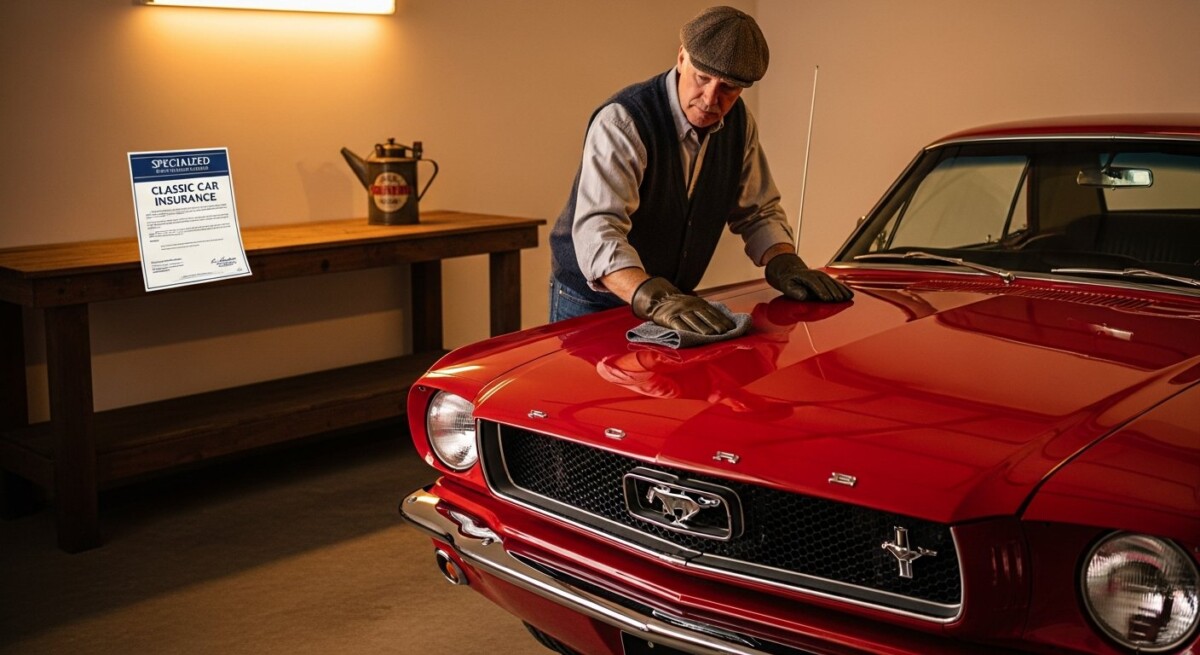
Owning a classic vehicle is more than a hobby: it is a commitment to preserving history, craftsmanship, and a piece of automotive art. Whether you drive a 1965 Mustang, a 1970 Chevelle, or a rare European sports car, standard auto insurance often falls short of protecting your investment. Classic cars appreciate over time, and their value is tied to condition, rarity, and provenance. A standard policy based on depreciated market value can leave you financially devastated after a total loss. That is why specialized auto insurance for classic vehicles exists: to provide agreed value coverage, flexible usage terms, and protections tailored to the unique risks of collector car ownership.
In this article, we break down how classic car insurance works, what it covers, how it differs from standard policies, and how to choose the right provider. We also answer common questions and share expert tips to help you secure the best protection for your prized automobile.
How Classic Car Insurance Differs from Standard Auto Policies
Standard auto insurance is designed for daily drivers that depreciate rapidly. Insurers calculate payouts based on actual cash value (ACV), which subtracts depreciation from the replacement cost. For a classic vehicle, ACV can be a fraction of its true market worth. In contrast, auto insurance for classic vehicles typically uses an agreed value structure. You and the insurer agree on a fixed value upfront, and that amount is paid in the event of a total covered loss, with no depreciation deduction.
Another major difference is usage restrictions. Classic car policies often limit annual mileage (commonly 2,500 to 5,000 miles) and require the vehicle to be stored in a locked garage when not in use. They may also restrict driving to club events, parades, exhibitions, and occasional pleasure drives. These limitations lower the insurer’s risk, which translates into lower premiums for you. Standard policies do not impose such restrictions because they assume regular commuting and higher exposure.
Additionally, classic car insurers often include specialized services such as spare parts coverage, towing to a preferred restoration shop, and coverage for tools and equipment. Some policies even cover the cost of appraisals and provide roadside assistance tailored to vintage vehicles. These features are rarely available in standard auto policies.
Key Coverage Types for Classic Vehicles
When shopping for auto insurance for classic vehicles, you will encounter several coverage options. Understanding each one helps you build a policy that matches your vehicle’s value and your driving habits.
- Agreed Value Coverage: You and the insurer agree on a specific dollar amount for the vehicle. In a total loss, you receive that full amount with no depreciation.
- Stated Value Coverage: You declare a value, but the insurer may only pay the actual cash value or the stated amount, whichever is lower. This is less protective than agreed value.
- Actual Cash Value (ACV): The insurer pays the depreciated market value at the time of loss. Avoid this for classic cars unless they are low-value.
- Spare Parts Coverage: Protects your inventory of original or reproduction parts, often with a separate limit.
- Roadside Assistance & Flatbed Towing: Specialized towing that prevents damage to low-clearance or fragile vehicles.
Most experts recommend agreed value coverage as the gold standard. It eliminates disputes over worth and ensures you can rebuild or replace your classic without financial shortfall. Stated value can leave a gap if the market value exceeds your stated amount at the time of loss. Always confirm that your policy explicitly uses agreed value language.
Understanding Liability and Uninsured Motorist Coverage
Liability coverage is mandatory in most states and covers damage you cause to others. For classic vehicles, liability limits should be higher than the state minimum because repair costs for other vehicles or medical expenses can be substantial. Uninsured/underinsured motorist coverage is equally critical: if a driver without adequate insurance hits your classic, this coverage pays for repairs or replacement. Given that classic cars are often irreplaceable, a robust liability and uninsured motorist package is a wise investment.
Qualifying for Classic Car Insurance
Not every older car qualifies for a classic car policy. Insurers typically require that the vehicle be at least 15 to 25 years old, though some accept vehicles as young as 10 years if they are collectible. The vehicle must be in good or excellent condition, and you must own a primary daily driver for regular transportation. You also need a clean driving record and a secure, locked storage location.
Some insurers require that you be a member of a recognized car club (e.g., Hagerty Drivers Club, AACA, or local marque clubs). Membership demonstrates commitment to the hobby and often provides additional benefits like event discounts and educational resources. If you plan to use your classic for regular commuting, you may not qualify for a true classic policy and might need a specialty collector car policy with higher mileage allowances.
To start, gather documentation: photographs of the vehicle from multiple angles, an appraisal from a certified appraiser, and receipts for any restoration work. This documentation helps establish the agreed value and proves the vehicle’s condition. In our guide on what full coverage auto insurance really includes, we explain how agreed value differs from standard full coverage.
How to Choose the Right Classic Car Insurer
Several companies specialize in auto insurance for classic vehicles, including Hagerty, Grundy, Heacock, American Collectors, and Chubb. Each has unique underwriting guidelines, coverage options, and pricing. Start by comparing quotes from at least three providers. Pay attention to the following factors:
- Agreed Value Guarantee: Does the policy explicitly state that the agreed value will be paid in a total loss?
- Usage Restrictions: How many miles per year are allowed? Can you drive to work occasionally?
- Coverage for Parts & Accessories: Are spare parts, tools, and custom modifications covered?
- Claims Process: Is there a dedicated claims team familiar with classic cars? Do they use approved repair shops?
- Customer Service: Read reviews on forums and consumer sites. A responsive agent can make a difference during a claim.
Once you have narrowed down options, request a sample policy document and read the exclusions carefully. Some policies exclude coverage if the vehicle is driven on certain roads or during inclement weather. Also, check whether the policy covers international travel if you plan to take your classic to shows abroad. For business owners who use their classic in a commercial context (e.g., a restaurant’s promotional vehicle), see our guide on what commercial auto insurance is and who needs it for additional considerations.
Cost of Classic Car Insurance vs. Standard Insurance
Classic car insurance often costs less than standard insurance for the same vehicle. Why? Because the vehicle is driven fewer miles, stored securely, and owned by a responsible enthusiast. Average annual premiums for classic car policies range from $300 to $1,000, depending on the vehicle’s value, your driving record, and coverage limits. In contrast, a standard policy on a 20-year-old daily driver can cost $1,200 or more per year.
However, premiums increase with higher agreed values, additional coverage types (e.g., spare parts, towing), and if you add multiple classic vehicles to the same policy. Discounts are often available for completing a certified driving course, being a member of a car club, or insuring multiple vehicles with the same company. Always ask about discounts before binding a policy.
It is also important to note that some standard insurers offer classic car endorsements, but these rarely match the comprehensive protection of a specialized policy. A standard endorsement may still use ACV or impose arbitrary caps on coverage. For serious collectors, a standalone classic car policy is almost always superior.
Common Exclusions and Pitfalls to Avoid
Even the best auto insurance for classic vehicles has exclusions. Common ones include:
- Racing or speed events (unless you buy special event coverage).
- Unattended vehicle theft if keys are left inside.
- Damage from improper storage (e.g., mold, rust, rodent infestation).
- Driving outside the allowed geographic area without prior approval.
- Using the vehicle for commercial purposes (e.g., paid rides, delivery).
To avoid surprises, read the exclusions section of your policy before you sign. If you plan to drive your classic to a track day or a parade, contact your insurer in advance to see if a temporary endorsement is available. Many insurers offer event-specific coverage for an additional fee.
Another pitfall is failing to update your agreed value as the car appreciates. Classic car values can rise significantly due to market trends or restoration improvements. Review your policy annually and request a new appraisal if the value has changed. If you do not, you risk being underinsured. For help choosing a provider that supports value adjustments, refer to our article on how to choose the best auto insurance companies for you.
Frequently Asked Questions
Can I use my classic car as a daily driver and still get classic car insurance?
Most classic car insurers require the vehicle to be used primarily for exhibitions, club events, and occasional pleasure driving. If you need to drive your classic daily, you may not qualify for a true classic policy. Some specialty insurers offer higher-mileage collector policies, but premiums will be higher. Alternatively, you can insure the car under a standard policy and add an agreed value endorsement, though this is less common.
What happens if my classic car is totaled and I have agreed value coverage?
You receive the full agreed value amount, minus any deductible, with no depreciation. For example, if you and the insurer agreed on $50,000 and the car is totaled, you get $50,000 (minus deductible). This differs from ACV policies, where you might receive only $35,000 due to depreciation.
Do I need an appraisal to get classic car insurance?
Most insurers require a professional appraisal for vehicles valued above a certain threshold (often $10,000 to $25,000). The appraisal establishes the agreed value and provides documentation for the insurer. Even if not required, getting an appraisal is a good practice to ensure you are adequately covered.
Does classic car insurance cover modifications and custom parts?
Yes, but you must disclose all modifications and custom parts during the application process. The insurer will factor their value into the agreed value. If you add modifications after the policy starts, notify your insurer immediately to update the value. Failure to do so may result in a coverage gap.
Can I insure multiple classic vehicles on one policy?
Yes, many insurers offer multi-vehicle discounts and allow you to schedule multiple classics on a single policy. This simplifies billing and ensures consistent coverage across your collection. Each vehicle will have its own agreed value and mileage allowance.
Final Thoughts on Protecting Your Classic Investment
Choosing the right auto insurance for classic vehicles is one of the most important decisions you can make as a collector. It safeguards not only your financial investment but also the time, passion, and craftsmanship invested in your vehicle. By opting for agreed value coverage, understanding policy exclusions, and working with a specialized insurer, you can enjoy your classic with peace of mind. Review your coverage annually, keep your appraisal current, and drive safely. For more insights on protecting your assets, explore our guide on what commercial auto insurance is: a guide for business owners if you ever use your classic in a business context. Protect your passion, protect your investment, and enjoy the open road.