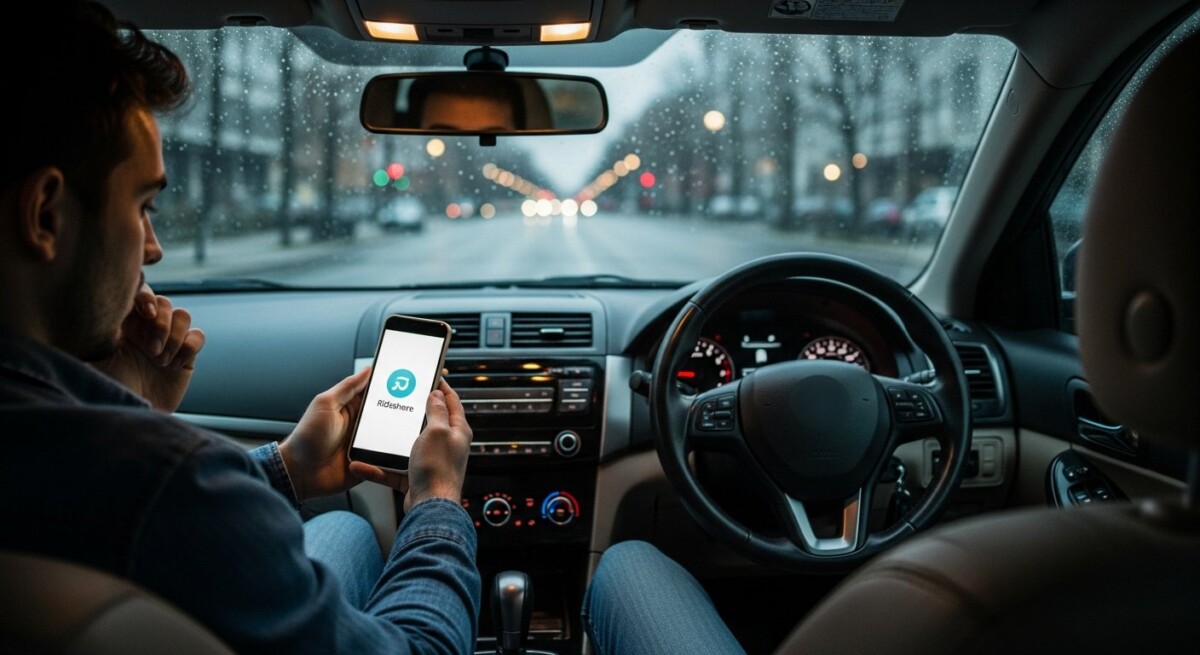
If you drive for Uber, Lyft, or another rideshare platform, you have likely experienced a moment of uncertainty when your personal auto insurance policy feels inadequate. The reality is that standard personal auto insurance is not designed to cover commercial activities like transporting passengers for pay. This creates a dangerous coverage gap that can leave you financially exposed during the most critical periods of your workday. Understanding and securing the right auto insurance for rideshare drivers is not just a recommendation, it is a fundamental requirement for protecting your livelihood, your passengers, and your financial future. This guide will walk you through the complexities of rideshare insurance, explaining the coverage phases, your options, and the steps you need to take to ensure you are never underinsured on the road.
Understanding the Rideshare Insurance Gap
Rideshare companies provide insurance, but it is conditional and operates in specific phases tied to your app status. This tiered system creates periods where neither your personal policy nor the company’s policy may fully cover you. The gap is most pronounced in Period 1, when the app is on but you have not yet accepted a ride. During this time, you are logged in and available, but most personal auto policies explicitly exclude commercial use. If you are involved in an accident, your insurer could deny the claim entirely, leaving you personally liable for damages and injuries. Even in later periods, the coverage limits provided by the rideshare company may be insufficient, especially for comprehensive or collision repairs to your own vehicle. Navigating this three-phase model is the first step to understanding your risk exposure.
The three standard phases are defined as follows. Period 1 is when the app is on but you have no passenger assignment. Period 2 begins when you accept a trip request and are en route to pick up the passenger. Period 3 covers the time from when the passenger enters your vehicle until the trip ends and they exit. Each phase triggers different levels of contingent liability coverage from the rideshare company, with Period 1 offering the least protection, often just minimal liability coverage that may not meet state requirements. This patchwork system underscores why supplemental auto insurance for rideshare drivers is essential.
Your Insurance Options as a Rideshare Driver
You have several pathways to secure proper coverage. The best choice depends on how frequently you drive, your state’s regulations, and your budget. Ignoring the issue is the most expensive option of all, as a single denied claim can lead to financial ruin.
The first and most critical step is to contact your current auto insurance provider. Inform them you are driving for a rideshare company and ask if they offer a rideshare endorsement or hybrid policy. An endorsement is an add-on to your existing personal policy that fills the coverage gaps, particularly in Period 1. It is often the most cost-effective solution for part-time drivers. If your insurer does not offer this, you will need to shop for a company that specializes in or accommodates rideshare coverage. Several major insurers now offer these endorsements due to high demand from gig economy workers.
For full-time drivers or those whose insurers do not provide an endorsement, a commercial auto insurance policy is the next option. This is a more expensive but comprehensive solution that covers you for all driving activities, personal and commercial. Finally, you can rely on the rideshare company’s policy, but this is risky. You should thoroughly review their certificate of insurance to understand the limits, deductibles (which can be very high, e.g., $2,500 for collision), and exclusions. Their policy is designed to protect the company first, not you.
Key Coverages to Secure
Beyond just filling the gap, you should ensure your policy includes specific coverages crucial for rideshare driving. Liability coverage is mandatory, but you should consider limits higher than your state’s minimum, as you have increased exposure. Uninsured/underinsured motorist coverage protects you if you are hit by a driver with little or no insurance. Comprehensive and collision coverage are vital for repairing or replacing your own vehicle after an accident, theft, or other damage. Remember, the rideshare company’s collision deductible is often prohibitively high. Furthermore, consider medical payments or personal injury protection (PIP) to cover medical expenses for you and your passengers, regardless of fault. For a deeper look at navigating claims processes, our step-by-step guide to filing your California auto insurance claim offers valuable insights that can be applied in many jurisdictions.
Steps to Get Properly Insured
Taking action is straightforward if you follow a systematic approach. Start by auditing your current personal auto insurance policy. Read the exclusions section carefully, looking for language that excludes “livery” or “for-hire” transportation. This will confirm the gap exists. Next, research your rideshare company’s insurance details. This information is usually found in the driver help section of their app or website. Note the coverage limits and deductibles for each period.
Armed with this information, you can begin shopping. Contact at least three to five insurance providers that offer rideshare endorsements or commercial policies. When comparing quotes, ensure you are comparing identical coverage levels and ask specific questions about how each policy handles the different periods. Be transparent about your driving activity, as misrepresenting your use of the vehicle is grounds for policy cancellation and claim denial. Once you select a policy, formally add the endorsement or purchase the new policy before you take another trip. Keep proof of insurance in your vehicle at all times. For drivers in specific states, understanding local nuances is key, as detailed in our complete guide to auto insurance in Massachusetts for drivers.
Cost Factors and Money-Saving Tips
The cost of auto insurance for rideshare drivers varies widely. Factors include your driving history, location, vehicle type, annual mileage, and the coverage limits you choose. Generally, a rideshare endorsement may increase your premium by 15% to 30% over a standard personal policy, while a full commercial policy can be significantly more. However, this cost is a prudent investment compared to the potential out-of-pocket expenses from a single accident.
To manage costs, consider these strategies. First, increase your deductibles for comprehensive and collision coverage if you can afford the higher out-of-pocket cost in a claim. This can lower your premium. Second, maintain a clean driving record, as violations and accidents will disproportionately increase your rates. Third, ask about all available discounts, such as those for bundling home or renters insurance, safe driving, or paying your premium in full. Fourth, use your vehicle’s telematics device or the rideshare app’s data (if applicable and with permission) to demonstrate safe driving habits for potential discounts. Finally, re-shop your coverage annually, as the market for rideshare insurance is evolving rapidly. Mature drivers should also explore specialized options, as some providers like AARP auto insurance offer benefits for mature drivers that can be combined with appropriate endorsements.
Frequently Asked Questions
Will my personal auto insurance cover me if I don’t tell them I’m ridesharing?
No. If you are in an accident while ridesharing and did not disclose this activity, your insurer will almost certainly investigate and likely deny the claim. This is considered material misrepresentation and can lead to policy cancellation.
Is rideshare insurance required by law?
While not always mandated by state law, it is required by the rideshare companies’ terms of service that you maintain your own personal policy. More importantly, from a practical standpoint, it is financially required to protect your assets.
What happens if I get into an accident during Period 1?
If you only have a personal policy, your claim will be denied. The rideshare company’s contingent liability may apply, but it is often minimal and may not cover damage to your vehicle. With a rideshare endorsement, your personal policy would cover you, subject to its terms.
Can I use my commercial auto policy for personal errands?
Yes, a true commercial auto policy typically covers all use of the vehicle. However, it is more expensive than a personal policy with an endorsement because it assumes higher risk.
Do I need different insurance for food delivery vs. passenger ridesharing?
The coverage gap concept is similar, but the endorsements and policies are specifically designed for rideshare (TNC) use. Food delivery may fall under a different commercial classification. You must inform your insurer of all gig economy activities. For a broader perspective on insurance options later in life, the AARP auto insurance comprehensive review for drivers over 50 provides a useful framework for evaluating insurer reliability.
Securing the right auto insurance is the most important business decision a rideshare driver can make. It transforms an unpredictable risk into a managed cost, allowing you to drive with confidence. The landscape of gig economy insurance continues to develop, but the principle remains constant: your primary financial protection must come from a policy you control. By proactively addressing the coverage gap, you safeguard not just your vehicle, but your entire financial stability, ensuring that your source of income doesn’t become a source of catastrophic loss. Review your coverage today, and drive protected tomorrow.