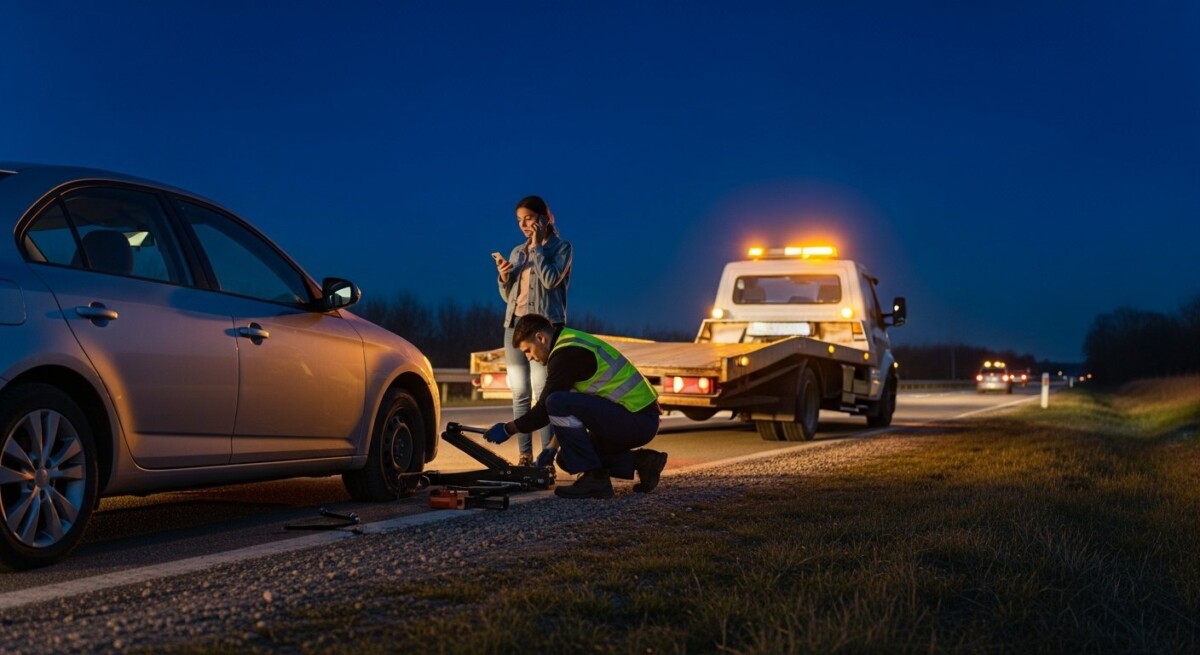
Picture this: you are driving home late at night on a lonely highway when your tire blows out. Or your engine suddenly starts smoking. Or you realize you left your headlights on and returned to a car that will not start. In those moments, panic sets in. You wonder who to call and how much it will cost. That is where auto insurance with roadside assistance becomes a lifeline. This coverage bundles emergency help with your standard policy, offering peace of mind without requiring a separate membership. But is it right for you? This article breaks down how roadside assistance works with your car insurance, what it covers, what it costs, and how to decide if it is a smart addition to your policy.
Roadside assistance is often an optional add-on, but some insurers include it automatically. The core idea is simple: when your vehicle becomes disabled, you call a 24/7 helpline, and a service provider is dispatched to help. Services typically include towing, battery jump-starts, flat tire changes, lockout assistance, and fuel delivery. Understanding the fine print and comparing it to standalone plans like AAA is essential before you add it to your policy. In this guide, we will explore the benefits, drawbacks, and hidden details that can save you money and stress.
What Does Auto Insurance With Roadside Assistance Cover?
Most standard policies that include roadside assistance cover five primary services. These are designed to handle the most common roadside emergencies. However, coverage limits vary by insurer and state. It is critical to review your policy documents or speak with an agent to confirm exactly what is included.
- Towing: If your vehicle cannot be driven due to an accident or mechanical failure, your policy pays for towing to a repair shop. Most plans cap this at a specific dollar amount per incident, often between $50 and $150.
- Battery Jump-Start: If your battery is dead, a technician will come to your location and jump-start your car. This is typically included with no extra fee beyond your policy cost.
- Flat Tire Change: If you have a spare tire, roadside assistance will change the flat for you. If you do not have a spare, they may tow your vehicle to a service station.
- Lockout Assistance: If you lock your keys inside your car, a locksmith or technician will attempt to unlock it. Some policies limit the number of lockout claims per year.
- Fuel Delivery: If you run out of gas, a service provider brings enough fuel to get you to the nearest station. You usually pay for the fuel itself, but the delivery fee is covered.
Some policies extend coverage to additional situations like winching (pulling a vehicle out of a ditch) or concierge services that help with travel arrangements after a breakdown. For example, if you are stranded far from home, some insurers offer reimbursement for lodging or rental cars. Always check the per-incident limits and annual caps, as these can make a big difference during a serious emergency. In our guide on auto insurance in Massachusetts for drivers, we explain how state-specific rules can affect coverage options.
How Much Does Roadside Assistance Cost on an Insurance Policy?
The cost of adding roadside assistance to your auto insurance is generally low. Most insurers charge between $3 and $10 per month for this coverage. That works out to roughly $36 to $120 per year. Compared to standalone plans like AAA, which can cost $60 to $150 annually for basic membership, insurance-based roadside assistance is often cheaper. However, there is a trade-off: using your roadside assistance through insurance may count as a claim. Some insurers increase your premiums slightly after a claim, especially if you use the service frequently. Standalone plans typically do not affect your insurance rates.
Another cost consideration is the deductible. In most cases, roadside assistance benefits do not require a deductible. You call, receive help, and the insurer pays the service provider directly. But if your policy includes towing with a dollar limit, any amount above that limit is your responsibility. For example, if your policy covers up to $100 for towing but the actual cost is $150, you pay the extra $50. Some policies also limit the number of service calls per year, often to three or four. Exceeding that limit means you pay out of pocket. Understanding these boundaries helps you avoid surprise bills.
When comparing costs, also consider the value of bundled services. Some insurers offer roadside assistance as part of a larger package, such as accident forgiveness or rental car reimbursement. These bundles can provide better overall value than buying each service separately. For drivers over 50, an AARP auto insurance review may reveal options that include roadside assistance at discounted rates.
Roadside Assistance vs. Standalone Plans: Which Is Better?
Choosing between insurance-based roadside assistance and a standalone plan like AAA or Good Sam depends on your driving habits, budget, and risk tolerance. Both options have distinct advantages. To help you decide, consider the following comparison points.
Insurance-Based Roadside Assistance: Pros and Cons
Insurance-based plans are convenient because they are already part of your policy. You do not need to carry a separate card or remember a different phone number. The cost is low and often automatically renewed with your policy. However, the biggest downside is that filing a roadside assistance claim may be treated like an insurance claim. In some states, insurers can raise your premiums after a claim, even if you were not at fault. Additionally, coverage limits can be restrictive. For example, towing distance may be capped at 10 or 15 miles, which might not be enough if the nearest repair shop is farther away.
Standalone Plans: Pros and Cons
Standalone plans like AAA offer more robust coverage. They often include longer towing distances, higher service limits, and additional perks like travel discounts, trip interruption coverage, and identity theft protection. They do not affect your insurance rates, and you can use them as often as your membership level allows. The downside is the higher upfront cost and the need to manage a separate membership. For families with multiple vehicles, adding roadside assistance to each car through insurance may be cheaper than buying separate memberships for each driver.
Ultimately, the best choice depends on your situation. If you rarely drive long distances or have a new, reliable car, insurance-based roadside assistance may be sufficient. If you frequently travel, drive an older vehicle, or want the highest level of protection, a standalone plan might be worth the extra cost. For those filing a claim after an incident, our step-by-step guide to filing a California auto insurance claim provides practical tips that apply to most states.
When Should You Add Roadside Assistance to Your Policy?
Not every driver needs this coverage. Here are situations where adding roadside assistance makes sense:
- You drive an older vehicle: Cars with high mileage or known mechanical issues are more likely to break down. Roadside assistance can save you from costly towing bills.
- You commute long distances: Commuters who drive 30 miles or more each way face higher risk of tire trouble, dead batteries, or accidents. Quick help can get you back on the road faster.
- You have a teenage driver: New drivers are more prone to minor errors like locking keys in the car or running out of gas. Roadside assistance provides peace of mind.
- You travel to remote areas: Rural roads with limited cell service and few repair shops make breakdowns more stressful. Coverage ensures help is just a phone call away.
- You want to avoid membership fees: If you dislike paying for separate memberships, bundling roadside assistance with your insurance simplifies your finances.
On the other hand, if you drive a brand-new car with a comprehensive warranty that includes roadside assistance, adding it to your insurance may be redundant. Also, if you already have a standalone membership like AAA and use it often, you might not need the insurance version. Review your existing coverage before making a decision.
Frequently Asked Questions
Does roadside assistance through insurance cover rental cars? Generally, no. Your personal auto policy covers the vehicle listed on your policy. If you are driving a rental car, you would need to use the rental company’s roadside assistance program or your standalone membership. Some credit cards also offer roadside benefits for rental cars.
Will my insurance premium increase if I use roadside assistance? It depends on your insurer and state laws. Some companies treat roadside assistance claims as non-chargeable incidents, meaning they do not affect your premium. Others may raise rates if you file multiple claims in a short period. Ask your agent about their specific policy before adding the coverage.
Can I use roadside assistance for someone else’s car? Usually, the coverage applies to the vehicle listed on your policy, not the driver. If you are driving a friend’s car and break down, you may not be covered. However, some policies extend coverage to any vehicle you are driving, so check your terms.
Is there a limit on how many times I can use roadside assistance per year? Yes, most policies cap usage at three to four calls per year. If you exceed that limit, you pay the full cost of the service. Standalone plans often have higher or unlimited service calls depending on the membership level.
Do I need to pay a deductible for roadside assistance? In most cases, no. The service is provided without a deductible. However, if towing costs exceed your policy’s limit, you pay the difference.
Making the Right Choice for Your Needs
Deciding whether to add roadside assistance to your auto insurance comes down to weighing cost against convenience. For many drivers, the low monthly premium is worth the peace of mind. You never have to worry about finding a tow truck in an unfamiliar area or paying inflated rates for emergency service. However, it is crucial to read the fine print. Know your coverage limits, service call caps, and how claims affect your rates. If you drive an older vehicle or have a long commute, this coverage can pay for itself with a single use.
For those who prefer a more comprehensive safety net, consider a standalone plan. The higher annual fee is offset by broader coverage and no impact on your insurance rates. Some drivers even combine both: using insurance-based assistance for minor issues and a standalone plan for major emergencies. The key is to match the coverage to your lifestyle. For mature drivers seeking specialized options, an AARP auto insurance review for drivers over 50 can highlight plans with added roadside benefits.
Ultimately, auto insurance with roadside assistance is a small investment that can prevent a bad day from becoming a financial headache. By understanding what is included, comparing costs, and considering your personal risk factors, you can choose the option that keeps you safe and secure on the road. And if you ever find yourself stranded, you will be glad you planned ahead.