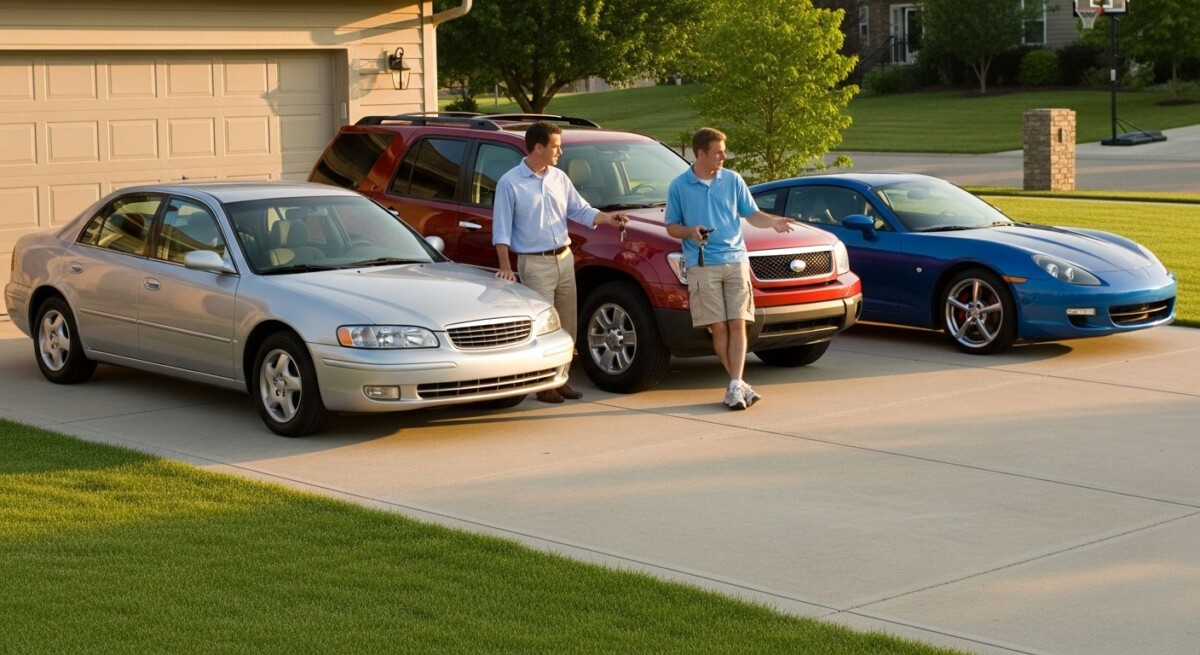
Owning two or more vehicles can feel like a logistical puzzle. You might juggle a sedan for commuting, an SUV for family trips, and a sports car for weekends. Each vehicle needs its own coverage, and managing separate policies often leads to confusion and higher costs. The smartest move for most households is bundling those vehicles under a single multi-car insurance policy. But what is the best auto insurance if you have multiple vehicles? The answer depends on your specific mix of cars, drivers, and coverage needs. This article breaks down how multi-car policies work, what discounts to look for, and how to compare carriers to find the right fit for your household.
Whether you are a couple with two cars, a family with a minivan and an SUV, or someone with a daily driver and a weekend toy, a multi-car policy can simplify your life and reduce your premiums. We will explain the key factors that determine the best option for you and show you how to use a comparison platform like Free Auto Insurance Quotes Online to evaluate top carriers side by side.
How Multi-Car Insurance Policies Work
A multi-car insurance policy allows you to insure two or more vehicles under one policy or one account with the same insurance company. This approach typically offers a discount that can range from 10% to 25% on the premium for each additional vehicle. The discount is applied because insurers see multiple vehicles as a lower risk. When you have multiple cars, you are less likely to drive each one as frequently, which reduces the chance of accidents on a per-vehicle basis.
Each vehicle on the policy can have different levels of coverage. For example, you might carry full coverage (comprehensive and collision) on a newer SUV but only liability coverage on an older sedan. Each driver in the household is assigned to a primary vehicle, and their driving record affects the rate for that specific car. However, the multi-car discount still applies to the entire policy.
Most major insurers offer multi-car policies, including State Farm, GEICO, Progressive, Allstate, and USAA. The best company for your situation depends on factors like your location, driving history, credit score, and the types of vehicles you own. In our guide on 2026 Auto Insurance Trends Shaping Your Rates, we explain how industry shifts like telematics and usage-based pricing could affect multi-car discounts in the near future.
Key Benefits of Insuring Multiple Vehicles Together
Bundling your vehicles under one policy offers more than just a discount. It also streamlines your administrative tasks. You have one renewal date, one bill, and one insurance company to contact if you need to make changes or file a claim. This simplicity can save hours of paperwork and phone calls each year.
Another benefit is flexibility with coverage. If one of your vehicles is a classic car or a collector vehicle, you can pair a standard policy with specialized coverage. For example, you might insure your daily driver with standard liability and collision, while adding a separate collector car policy for a vintage Mustang. Some insurers allow you to bundle these under the same account to still qualify for a multi-vehicle discount. For more details on protecting specialty vehicles, see our Complete Guide to Auto Insurance in Massachusetts for Drivers, which covers state-specific rules that also apply to multi-car households.
Here are the primary advantages of a multi-car policy:
- Lower premiums per vehicle: Discounts of 10% to 25% on each additional car after the first one.
- Simplified billing: One monthly or annual payment instead of multiple invoices.
- Easier claims management: File a single claim for an accident involving any vehicle on the policy.
- Consistent coverage across vehicles: You can tailor deductibles and limits for each car while keeping the same insurer.
These benefits make multi-car policies especially attractive for families with teenage drivers, couples with separate commutes, and households that own both a primary vehicle and a secondary car for errands or recreation.
What to Look for in a Multi-Car Policy
When evaluating what is the best auto insurance if you have multiple vehicles, focus on three critical factors: the discount percentage, the coverage flexibility, and the claims process. Not all multi-car discounts are created equal. Some insurers offer a flat percentage off the entire policy, while others apply a smaller discount to each additional vehicle. Always ask for a breakdown of how the discount is calculated.
Coverage flexibility matters because your vehicles likely have different values and usage patterns. A brand new minivan might need higher liability limits and comprehensive coverage, while a 10-year-old commuter car might only need state-minimum liability. The best policy allows you to customize each vehicle’s coverage without losing the multi-car discount.
The claims process is another differentiator. If you have a multi-car policy and one vehicle is in an accident, you want a smooth claims experience that does not delay repairs for your other cars. Look for insurers with high customer satisfaction ratings for claims handling. Resources like J.D. Power and the National Association of Insurance Commissioners provide annual rankings that can guide your decision.
Additionally, consider bundling your auto policy with homeowners or renters insurance. Many carriers offer a multi-policy discount that stacks on top of the multi-car discount, potentially saving you 15% to 30% overall. For example, if you insure two cars and your home with the same company, you could see significant savings.
Comparing Top Insurers for Multi-Car Policies
To identify the best option for your household, compare at least three to five quotes from different carriers. Each company uses its own algorithm to calculate rates, so premiums can vary widely for the same coverage. Below is a comparison of how major insurers typically approach multi-car discounts.
State Farm: Known for its multi-car discount that can reach 20% for two vehicles. It offers strong customer service and a mobile app for policy management. Ideal for families who want a local agent.
GEICO: Offers a multi-vehicle discount of up to 25% on the second car. GEICO is often competitive for drivers with clean records and good credit. Its online quote process is fast and user-friendly.
Progressive: Uses a Name Your Price tool that lets you set a budget, and then it shows coverage options that fit. The multi-car discount is typically 10% to 15%, but bundling with other policies can increase savings.
Allstate: Provides a multi-car discount of up to 20% and a Drivewise program that rewards safe driving with additional savings. Best for households with multiple drivers who are open to telematics.
USAA: Offers the highest multi-car discounts, often exceeding 25%, but only for military members and their families. If you are eligible, USAA is frequently the most affordable option.
When you compare quotes, ensure each one includes the same coverage limits and deductibles for each vehicle. This apples-to-apples comparison reveals which carrier offers the best rate for your specific situation. You can use the comparison tool at Free Auto Insurance Quotes Online to see quotes from multiple carriers side by side without entering your information multiple times.
How to Get the Best Rate for Multiple Vehicles
Securing the lowest premium for a multi-car policy requires strategy beyond just choosing a company with a big discount. Start by reviewing your current coverage and eliminating any overlap or unnecessary add-ons. For example, if you have roadside assistance through a credit card or automaker, you might not need it on your insurance policy.
Next, consider raising your deductibles. If you can afford a higher out-of-pocket cost for a claim, opting for a $1,000 deductible instead of $500 can lower your premium by 20% to 30%. This strategy works best when applied to all vehicles on the policy, as the savings multiply.
You should also ask about low-mileage discounts. If one of your vehicles is driven less than the average annual mileage (usually under 7,500 miles), you may qualify for a discount. This is common for secondary cars or vehicles used only for weekend trips.
Another approach is to review your credit score and driving records. Insurers use these factors to set rates. Improving your credit score by paying down debts and correcting errors on your credit report can lead to lower premiums. Similarly, taking a defensive driving course might earn you a discount on all vehicles on the policy.
If you add a new driver to the policy, such as a teenager, the rate increase can be significant. However, many insurers offer good student discounts or driver training discounts that can offset the cost. Adding a young driver to an existing multi-car policy is often cheaper than purchasing a separate policy for them. For a detailed walkthrough, check out our article on Adding a Driver to Your Auto Insurance Policy: A Complete Guide.
Special Considerations for Different Vehicle Types
Not all vehicles on a multi-car policy are treated equally by insurers. The make, model, age, and safety features of each car influence the rate. A luxury sedan or a high-performance sports car will cost more to insure than a family sedan or an SUV, even with the multi-car discount applied. Insurers view expensive cars as riskier because repair costs and theft rates are higher.
If you own a classic or collector car, you may need a separate policy from a specialty insurer like Hagerty or Grundy. These policies offer agreed-value coverage and lower rates for limited mileage. While you cannot bundle a collector policy with a standard auto policy under the same discount, you can still maintain both through the same agent for convenience.
Electric vehicles (EVs) also have unique insurance considerations. Repair costs for EVs can be higher due to specialized parts and labor. Some insurers offer specific discounts for EVs, such as lower rates for vehicles with advanced safety technology. If your multi-car household includes an EV, compare how different carriers handle its coverage.
For households with commercial vehicles, such as a work truck, you typically need a separate commercial auto policy. However, you can insure personal vehicles under a multi-car policy and keep the commercial policy separate. Mixing personal and commercial vehicles on the same policy can lead to coverage gaps or claim denials.
If you live in a state with specific insurance requirements, such as Massachusetts, your multi-car policy must comply with those rules. Our Complete Guide to Auto Insurance in Massachusetts for Drivers explains the minimum coverage limits and how they apply to multiple vehicles.
Frequently Asked Questions
Can I have different coverage levels on each vehicle under one policy?
Yes, most insurers allow you to customize coverage for each vehicle on a multi-car policy. You can choose different liability limits, deductibles, and optional coverages like rental reimbursement or roadside assistance for each car. The multi-car discount still applies to the entire policy.
Does a multi-car policy cover all drivers in the household?
Yes, all licensed drivers in your household should be listed on the policy. Each driver is typically assigned to a primary vehicle, but they are covered when driving any vehicle on the policy. If you have a teenage driver, they will usually be assigned to the least expensive vehicle to keep rates lower.
What if I sell one of my vehicles?
If you sell a vehicle, you can remove it from the policy, and the multi-car discount will adjust accordingly. You may lose some of the discount, but you will still have coverage on your remaining vehicles. Notify your insurer immediately to avoid paying for coverage you no longer need.
Is it cheaper to insure two cars with the same company or different companies?
In most cases, it is cheaper to insure multiple vehicles with the same company because of the multi-car discount. Separating policies with different carriers means you lose that discount and may pay more overall. However, if one driver has a poor record, it might be cheaper to insure them separately to avoid raising rates on the other vehicles.
How do I know if I am getting the best rate for my multi-car policy?
The only way to know is to compare quotes from multiple insurers at least once a year. Rates change, and new discounts become available. Use a comparison platform like Free Auto Insurance Quotes Online to see quotes from top carriers without obligation. You can also ask your current insurer about any new discounts you might qualify for.
Taking the Next Step
Finding the best auto insurance for multiple vehicles does not have to be complicated. Start by gathering information about your current coverage, your vehicles, and the drivers in your household. Then, compare quotes from at least three carriers using a tool that shows you side-by-side pricing. Focus on the total premium for all vehicles combined, not just the discount percentage. A policy with a slightly lower discount but better claims service might be a better value than the cheapest option.
Remember that your needs can change over time. When you buy a new car, a teenager gets a license, or you move to a new state, revisit your policy. Regularly reviewing your coverage ensures you are not overpaying or underinsured. For drivers in the Northeast, our guide on Auto Insurance Connecticut: Save Money on Your Car Insurance provides state-specific tips that apply to multi-car households as well.
Ultimately, the best multi-car policy is one that balances affordability with the coverage you need to protect your family and your assets. By understanding how these policies work and comparing your options, you can make an informed decision that saves you money and gives you peace of mind. Start your comparison today at Free Auto Insurance Quotes Online to see how much you could save on your multi-car policy. For personalized assistance, call 833-275-7533 to speak with a licensed agent who can help you find the right coverage for all your vehicles.