
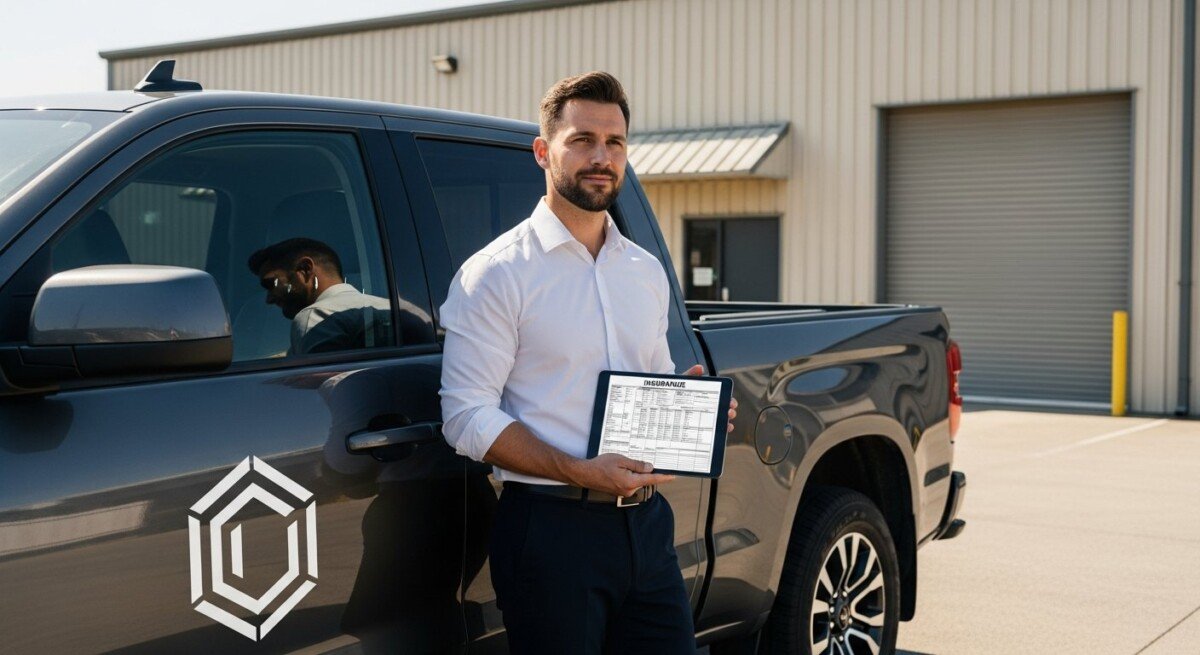
Commercial Auto Insurance: A Business Owner’s Essential Guide
Secure the right coverage to protect your business assets on the road. Call 833-275-7533 for expert guidance on commercial auto insurance.

By Dominic Ashby
If your business uses vehicles, from a single pickup truck to an entire fleet, your personal auto policy is a dangerous and inadequate shield. Commercial auto insurance for commercial vehicles is not a luxury, it is a fundamental operational requirement. This specialized coverage is designed to address the unique and heightened risks that come with using vehicles for work. Without it, a single accident could lead to devastating financial losses, including massive liability claims, repair costs for expensive equipment, and significant business interruption. Understanding the intricacies of this coverage is not just about compliance, it is about protecting the very foundation of your enterprise from risks that standard insurance simply will not cover.
What Is Commercial Auto Insurance and Why Is It Mandatory?
Commercial auto insurance is a policy specifically designed to cover vehicles used for business purposes. It provides liability, collision, and comprehensive coverage, but with limits and structures built for commercial exposure. The core distinction from personal auto insurance lies in the “use” of the vehicle. Once a vehicle is used to generate income, transport goods or tools, or visit clients, it generally falls outside the scope of a personal policy. Most personal policies contain explicit exclusions for livery (transporting people for a fee) and delivery, making any claim arising from business use likely to be denied. This leaves the business owner personally liable for all damages.
Beyond contract exclusions, state laws typically require businesses to carry specific minimum levels of liability coverage for registered commercial vehicles. The required limits are often higher than personal auto mandates because the potential for damage is greater. For instance, a commercial truck causing a multi-car accident could result in catastrophic bodily injury and property damage claims far exceeding personal policy limits. Furthermore, if your business has employees who drive, whether in company-owned or their own personal vehicles for work (a scenario known as “non-owned auto” exposure), you need coverage for that as well. A robust commercial auto policy is the only way to ensure these gaps are sealed.
Key Coverages in a Commercial Auto Policy
A well-structured commercial auto policy is a bundle of several critical coverages, each addressing a different facet of risk. The most essential component is liability insurance, which is usually mandated by law. This covers bodily injury and property damage that you or your employees cause to others while operating a covered vehicle. It pays for medical expenses, legal defense, and settlements or judgments up to your policy limit. Given the scale of potential accidents, businesses should seriously consider limits well above state minimums.
Physical damage coverage is divided into two parts: collision and comprehensive. Collision covers damage to your vehicle from an impact with another object or from overturning. Comprehensive covers damage from non-collision events like theft, vandalism, fire, hail, or hitting an animal. For businesses with expensive, specialized, or vital vehicles, this coverage is crucial to avoid a major capital loss. Other important coverages include Medical Payments or Personal Injury Protection (PIP), which covers medical expenses for you and your passengers regardless of fault, and Uninsured/Underinsured Motorist Coverage, which protects you if you are hit by a driver with little or no insurance.
Two often-overlooked but vital endorsements are Hired and Non-Owned Auto Liability (HNOA). This protects your business if an employee causes an accident while using a rented vehicle (hired) or their own car (non-owned) for business errands. Without it, your business could be sued directly. Similarly, Motor Truck Cargo insurance is essential for businesses that transport goods for others, covering the loss or damage to the freight being hauled. As with any complex policy, reviewing the specifics of a claim process is vital. For a detailed look at that procedure, our step-by-step guide to filing an auto insurance claim outlines the critical steps to follow after an incident.
Who Needs Commercial Vehicle Insurance?
The need for this insurance extends far beyond large trucking companies. Any entity that uses a vehicle as a tool of its trade likely requires a commercial policy. This includes obvious candidates like delivery services, contractors, plumbers, electricians, and landscapers who carry tools and materials. However, it also encompasses less obvious professions. Real estate agents driving clients to properties, sales representatives visiting customers, and even pizza delivery drivers using their own cars are engaged in commercial use. The modern gig economy has further blurred the lines, making it essential for rideshare and food delivery drivers to understand their specific coverage gaps and options.
Consider these common business scenarios that necessitate a commercial policy:
- Vehicles registered under a business name or LLC.
- Vehicles with a gross vehicle weight rating (GVWR) over 10,000 pounds, such as large vans, box trucks, or dump trucks.
- Vehicles used to transport tools, equipment, or materials (even if just a ladder in a pickup).
- Vehicles used to transport people for a fee or as part of a service (e.g., shuttle services).
- Employees who routinely use their personal vehicles for business tasks, creating non-owned auto exposure.
Failing to secure proper coverage in these situations is a severe risk. An insurance company investigating a claim will look for evidence of commercial use (like business logos, work orders in the vehicle, or time of the accident during work hours) and can deny the claim, leaving the business owner personally responsible. This is a common pitfall for new business owners who may be focused on understanding their state’s basic auto insurance rules but overlook the commercial distinction.
Factors That Influence Your Commercial Auto Insurance Cost
The premium for a commercial auto policy is calculated using a complex matrix of risk factors. Insurers assess the likelihood of a claim based on the nature of your business and its driving operations. One of the primary factors is the type of business and how vehicles are used. A florist making local deliveries presents a different risk profile than a construction company hauling heavy machinery on highways. The driving records of all employees who will operate vehicles are scrutinized closely, with violations and accidents leading to higher premiums.
The vehicles themselves are also a major rating factor. Insurers consider the make, model, age, safety features, and most importantly, the cost to repair or replace them. A fleet of new, expensive electric trucks will cost more to insure than older sedans. Furthermore, the radius of operation significantly impacts price. Vehicles that travel locally pose less risk than those on long-haul routes across the country, which have more exposure to accidents, theft, and varied road conditions. Annual mileage is a direct correlate to risk, more miles driven equates to a higher chance of an incident.
Finally, your chosen coverage details, including deductibles and liability limits, directly affect your premium. Higher deductibles lower your premium but increase your out-of-pocket cost if a claim occurs. Selecting liability limits that are appropriate for your business’s risk is a critical financial decision. It is also worth noting that some demographics, such as mature business owners, may find specialized providers. For example, a review of providers like AARP Auto Insurance benefits for mature drivers can highlight options that consider factors beyond just the commercial risk.
How to Buy the Right Policy and Save Money
Purchasing commercial auto insurance requires a proactive and informed approach. Start by working with an independent agent or broker who specializes in commercial lines. They can access multiple insurance carriers, explain coverage nuances, and help you compare quotes. Be prepared to provide detailed information about your business, including the number of vehicles, their primary use, driver information, and annual mileage estimates. Accuracy here is paramount, as misrepresentation can lead to claim denials.
To manage costs, focus on risk mitigation. Implementing a formal driver safety program, requiring regular motor vehicle record checks, and using telematics or GPS tracking to monitor driving behavior can not only reduce accidents but also demonstrate to insurers that you are a responsible risk, potentially qualifying you for discounts. Bundling your commercial auto policy with other business insurance lines, like general liability or commercial property, under a Business Owner’s Policy (BOP) can also yield significant premium savings. Regularly review and adjust your coverage as your business evolves, adding or removing vehicles and adjusting limits as needed. For business owners in specific life stages, exploring all available options is wise. A comprehensive review of AARP Auto Insurance for drivers over 50 illustrates how to evaluate insurer fit based on multiple criteria.
Frequently Asked Questions
Can I use my personal auto insurance for business purposes?
Generally, no. Most personal auto policies contain exclusions for business use, including delivery, ride-sharing, and transporting goods or tools. Using your personal vehicle for business without a proper endorsement or commercial policy puts you at risk of claim denial.
What is the difference between hired and non-owned auto insurance?
Hired auto covers liability for vehicles you rent, lease, or borrow. Non-owned auto covers liability when an employee uses their personal vehicle for business tasks. Both are critical endorsements to protect your business from lawsuits.
How much liability coverage do I need?
While state minimums provide a legal baseline, they are often insufficient for commercial operations. Consider the worst-case scenario, the total value of assets you need to protect, and industry standards. Many businesses opt for limits of $1 million or more.
What happens if an employee has an accident in their own car while on business?
The employee’s personal auto insurance is primary. However, if their limits are exhausted or the claim is denied due to business use, your business could be sued directly. Non-owned auto liability coverage would then respond to protect your business assets.
Does commercial auto insurance cover the cargo I am hauling?
No, standard commercial auto policies exclude cargo belonging to others. You need a separate Motor Truck Cargo insurance policy to cover loss or damage to the goods you are transporting for hire.
Securing the right commercial auto insurance is a strategic business decision that safeguards your assets, ensures compliance, and provides peace of mind. It allows you to focus on growing your enterprise, knowing that a major risk vector is professionally managed. By thoroughly assessing your needs, working with a knowledgeable agent, and proactively managing your risks, you can obtain coverage that is both comprehensive and cost-effective, forming a resilient foundation for your business’s journey on the road.