
Uninsured Motorist Bodily Injury Coverage Explained
Uninsured motorist bodily injury coverage explained: it pays your medical bills, lost wages, and pain and suffering when an uninsured driver hits you. Call (833)-275-7533 to compare quotes.

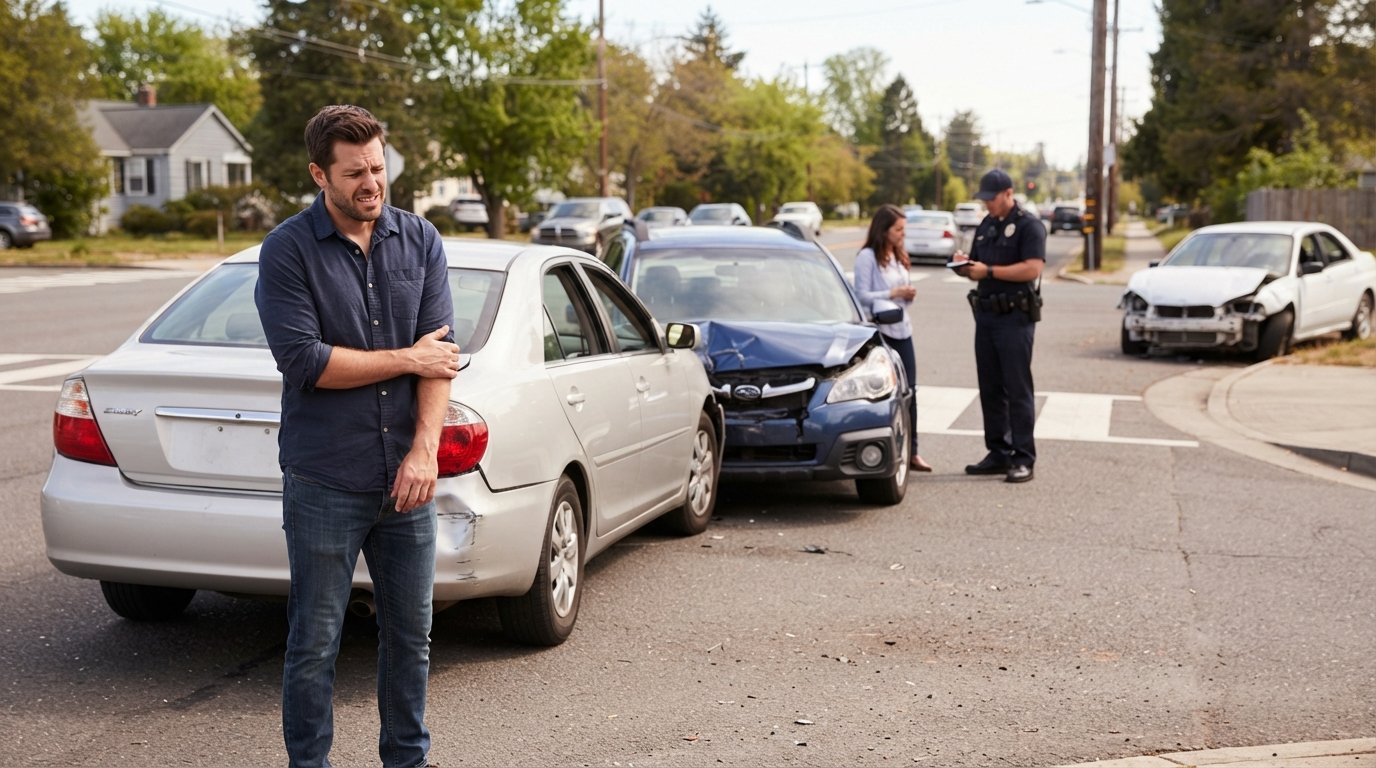
Imagine this: you are stopped at a red light when a driver without insurance slams into your car. You suffer a broken arm and whiplash. Your own health insurance might cover some costs, but who pays for your lost wages, your pain and suffering, or the rehabilitation you need? This is where uninsured motorist bodily injury coverage, often called UMBI or UM/UIM, becomes critical. Many drivers focus only on liability coverage, but UMBI protects you when the other driver cannot or will not pay. In this guide, we will break down exactly what UMBI covers, how it interacts with other policies, and why it might be the most important coverage you have never thought about.
What Is Uninsured Motorist Bodily Injury Coverage?
Uninsured motorist bodily injury coverage (UMBI) is a type of auto insurance that pays for your medical expenses, lost wages, and other damages when you are injured in an accident caused by a driver who has no insurance. It also applies in hit-and-run accidents where the at-fault driver cannot be identified. UMBI is distinct from uninsured motorist property damage (UMPD), which covers damage to your vehicle. While UMPD is not available in every state and often has a lower limit, UMBI focuses on personal injuries, which can be far more costly.
UMBI is not a substitute for health insurance, but it fills gaps that health insurance may leave, such as deductibles, copays, and non-medical damages like pain and suffering. It also typically covers passengers in your vehicle and, in some states, you as a pedestrian or cyclist if struck by an uninsured motorist. The coverage is designed to put you in the same position you would have been in if the at-fault driver had carried adequate liability insurance.
It is important to understand that UMBI is not the same as underinsured motorist coverage (UIM), although they are often bundled together. UMBI applies when the at-fault driver has no insurance at all, while UIM applies when the at-fault driver has insurance but its limits are too low to cover your damages. In many states, insurers offer combined UM/UIM coverage, and you can purchase higher limits than the state minimum. For a deeper look at how full coverage works, see our guide on Comprehensive Auto Insurance: Full Coverage Explained.
What Does UMBI Pay For?
UMBI can pay for a wide range of expenses and losses that result from an accident with an uninsured driver. The exact coverage depends on your policy limits and state law, but generally, it includes medical bills, lost wages, and pain and suffering. Here is a breakdown of what UMBI typically covers:
- Medical expenses: Emergency room visits, hospital stays, surgeries, doctor visits, prescription medications, and rehabilitation costs.
- Lost wages: Income you lose because you cannot work due to your injuries, including self-employment income.
- Pain and suffering: Compensation for physical pain, emotional distress, and reduced quality of life.
- Other damages: In some cases, UMBI may cover funeral expenses, loss of consortium (the impact on your relationship with a spouse), and other non-economic damages.
It is crucial to note that UMBI does not pay for damage to your vehicle. That is handled by UMPD or your collision coverage. Also, UMBI is not a substitute for liability coverage, which pays for injuries you cause to others. UMBI is specifically for your injuries when the other driver is at fault and lacks insurance.
When you file a UMBI claim, you typically need to provide evidence of the accident, the other driver's lack of insurance, and your medical records. Your insurer will then evaluate your claim and pay up to your policy limit. If your damages exceed the limit, you may have to rely on your health insurance or pursue other options, such as a lawsuit against the at-fault driver (though collecting may be difficult if they have no assets).
How Underinsured Motorist Coverage Fills the Gap
Underinsured motorist coverage (UIM) is closely related to UMBI but addresses a different scenario: the at-fault driver has insurance, but its limits are too low to cover your injuries. For example, if the other driver has a 25/50/25 policy (the minimum in many states) and you suffer $100,000 in medical bills, their policy will only pay up to $25,000 per person. Your UIM coverage can then step in to cover the difference, up to your own UIM limit.UIM is not available in all states, and the rules vary. Some states require insurers to offer UIM, while others make it optional. In some states, UIM is automatically included unless you reject it in writing. It is important to review your policy to see if you have UIM and what limits apply. UIM often comes bundled with UMBI, so when you purchase uninsured motorist coverage, you may also be getting underinsured motorist coverage.
The combination of UMBI and UIM provides comprehensive protection against drivers who lack insurance or have insufficient coverage. Without these coverages, you could be left paying out of pocket for expenses that were not your fault. Given that approximately one in eight drivers nationwide is uninsured, according to the Insurance Research Council, the risk is significant. For more information on coverage options, you can visit NewAutoInsurance, an independent online resource for consumer guidance.
State Requirements for UMBI
UMBI requirements vary widely by state. Some states require UMBI as part of the minimum auto insurance policy, while others require insurers to offer it but allow you to reject it in writing. A few states do not require UMBI at all but may require UIM or offer it as an option. Here is a general overview:
- Required UMBI: States like New York, Connecticut, and Maryland require uninsured motorist coverage as part of the minimum policy.
- Must be offered and can be waived: Many states, including California, Texas, and Florida, require insurers to offer UMBI but allow you to sign a waiver to decline it.
- Optional: Some states do not mandate UMBI or UIM, but insurers may offer it as an optional coverage.
It is essential to know your state's laws. For example, in Texas, UMBI is not required, but insurers must offer it, and you must reject it in writing if you do not want it. In California, UMBI is also optional but must be offered. In New York, UMBI is mandatory, and the minimum limits are relatively low. Regardless of state requirements, purchasing UMBI is generally a wise decision for most drivers, as it provides a safety net against uninsured drivers.
When comparing quotes, always check the UMBI limits. Many drivers simply accept the state minimum, which may be insufficient to cover serious injuries. For instance, the minimum UMBI limit in some states is $25,000 per person, which can be quickly exhausted by a single hospital stay. Choosing higher limits, such as $100,000 per person or $300,000 per accident, costs relatively little and provides much greater protection.
Why You Should Compare UMBI Limits Alongside Liability Limits
When shopping for auto insurance, most people focus on liability limits because they are required by law. However, your UMBI limits should be just as important, if not more so. Liability coverage protects others from you, while UMBI protects you from others. If you are injured by an uninsured driver, your UMBI limit is the maximum your insurer will pay for your injuries. If that limit is low, you could be stuck with significant out-of-pocket costs.
A good rule of thumb is to carry UMBI limits that are at least equal to your liability limits. If you have 100/300/50 liability coverage, you should consider 100/300 UMBI coverage. This ensures that you are protecting yourself as much as you are protecting others. The cost difference between minimum UMBI and higher limits is often just a few dollars per month, making it one of the best values in insurance.
When you request quotes, ask specifically about UMBI and UIM limits. Our platform, Free Auto Insurance Quotes Online, allows you to compare quotes from multiple carriers side by side, so you can see how different UMBI limits affect your premium. You can also use our Get a Quote tool to receive personalized quotes from licensed agents. Taking a few minutes to compare UMBI limits could save you thousands of dollars in the event of an accident.
Common Myths About UMBI
There are several misconceptions about uninsured motorist bodily injury coverage that can lead drivers to make poor decisions. One common myth is that health insurance makes UMBI unnecessary. While health insurance covers medical bills, it does not cover lost wages or pain and suffering, and it may have deductibles and copays that UMBI could cover. Another myth is that UMBI is only for uninsured drivers, but it also applies to hit-and-run accidents and, in some states, to underinsured drivers through UIM.
Some drivers believe that UMBI is expensive, but in reality, it is often quite affordable. The cost varies by state, insurer, and your driving record, but adding UMBI to your policy typically costs less than a daily coffee. Given the potential financial devastation of an accident with an uninsured driver, UMBI is a smart investment. Finally, some drivers think that if they have UMBI, they do not need to worry about liability coverage. That is not true: liability coverage is still essential to protect your assets if you cause an accident.
Understanding these myths can help you make an informed decision. If you are unsure about your current coverage, review your policy or contact your insurer. You can also reach out to our team at (833)-275-7533 for guidance on comparing quotes and understanding your options.
How to File a UMBI Claim
Filing a UMBI claim is similar to filing a claim against another driver's liability insurance, but you file with your own insurer. Here are the general steps:
- Report the accident: Notify your insurer as soon as possible, providing details of the accident, the other driver's information (if available), and any police report number.
- Document the uninsured status: If the other driver is uninsured, provide evidence such as a police report stating no insurance or a statement from the other driver. For hit-and-run, provide a police report.
- Submit medical records and proof of lost wages: Your insurer will need documentation of your injuries, treatment, and income loss to evaluate your claim.
- Cooperate with the investigation: Your insurer may investigate the accident and your injuries. Be honest and provide all requested information.
- Negotiate a settlement: Once your claim is evaluated, you may receive a settlement offer. You can negotiate if you believe the offer is too low.
It is important to act promptly, as there may be deadlines for filing claims. Also, keep in mind that your UMBI coverage is limited by your policy limits, so if your damages exceed the limit, you may need to explore other options, such as suing the at-fault driver. However, collecting from an uninsured driver is often difficult, which is why having adequate UMBI limits is so important.
In conclusion, uninsured motorist bodily injury coverage is a vital protection for any driver. It fills the gap left by uninsured and underinsured drivers, covering medical bills, lost wages, and pain and suffering. By understanding how UMBI works and comparing limits alongside your liability coverage, you can ensure that you and your family are protected on the road. Do not wait until it is too late: review your policy today and consider increasing your UMBI limits. For personalized quotes and expert advice, contact us at (833)-275-7533 or use our online comparison tool.