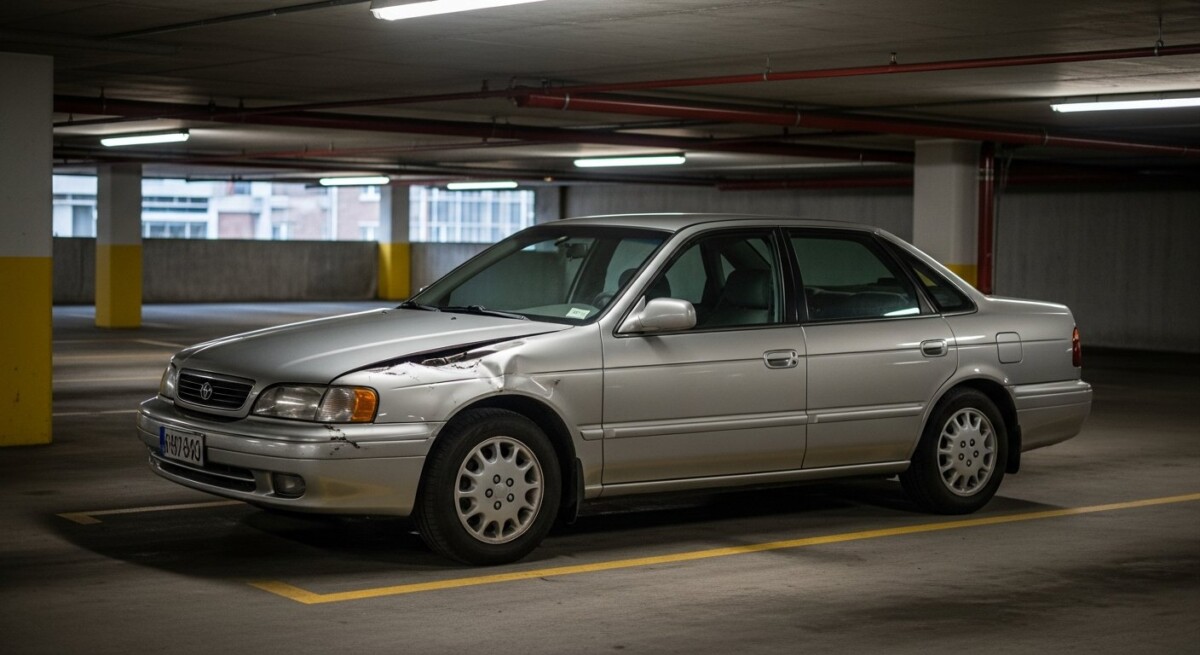
You back out of a parking spot, and then you hear it. A crunch. Your bumper is now wrapped around a concrete pillar. In that moment, your stomach drops. You think about the repair cost, the hassle, and the insurance claim. If you carry auto insurance with collision coverage, that sick feeling fades a little. This type of protection pays to repair or replace your car when you hit something, regardless of fault. Without it, a single mistake could cost you thousands of dollars out of pocket. Understanding how this coverage works, when it makes sense, and how to buy it wisely can save you a significant amount of money and stress.
What Is Auto Insurance With Collision Coverage?
Collision coverage is a specific part of a standard auto insurance policy. It covers damage to your vehicle caused by a collision with another car, an object like a guardrail or tree, or from a rollover. The key distinction is that it applies even when you are the one at fault. If you accidentally rear-end someone, slide into a ditch, or hit a fence, collision coverage pays for the repairs to your car minus your deductible. This is different from liability insurance, which only covers damage you cause to other people’s property. And it is separate from comprehensive coverage, which handles non-collision events like theft, vandalism, hail, or hitting an animal.
Many drivers confuse collision with full coverage. Full coverage is not a specific policy type but a combination of liability, collision, and comprehensive coverage. In our guide on how to get AAA auto insurance quotes and compare rates, we explain how bundling these coverages affects premiums. Collision coverage is almost always optional if you own your car outright. However, if you have a car loan or lease, the lender will require it to protect their asset. The cost of collision coverage depends on your vehicle’s value, your deductible choice, and your driving history.
When Do You Actually Need Collision Coverage?
Deciding whether to carry collision coverage is a financial calculation. You should weigh the value of your car against the annual premium cost. A simple rule is to ask yourself: could you afford to replace your car out of pocket tomorrow? If the answer is no, you need collision coverage. For a newer car worth over $10,000, the protection is usually worth it. For an older, beat-up sedan worth $3,000, paying $800 a year for collision may not make sense. In that case, the premiums over a few years could exceed the car’s total value.
Another factor is your emergency fund. If you have enough savings to absorb a $5,000 repair bill without hardship, you might choose to drop collision on an older vehicle. But most drivers do not have that kind of cash sitting around. A single accident could derail your budget for months. Collision coverage provides peace of mind and financial predictability. It also protects you from being stuck with a car loan on a totaled vehicle. If you owe money on the car and it is wrecked, collision coverage ensures the lender gets paid and you are not left paying for a car you cannot drive. For a deeper look at how different carriers handle this, check out our review of Geico auto insurance: a deep dive into coverage and value.
How Deductibles Affect Your Auto Insurance With Collision Coverage
The deductible is the amount you pay out of pocket before your insurance kicks in. Common deductible amounts are $250, $500, $1,000, and $2,000. Choosing a higher deductible lowers your monthly premium. For example, raising your deductible from $500 to $1,000 might reduce your collision premium by 15 to 30 percent. That can save you hundreds of dollars per year. But there is a trade-off. If you get into an accident, you must come up with that larger amount before the shop can start repairs.
Here are the key considerations when choosing a deductible for collision coverage:
- Cash on hand: Choose a deductible you can comfortably pay from your savings. Do not pick $2,000 if you only have $1,000 in the bank.
- Claim frequency: If you have a clean driving record, a higher deductible is a safe bet. If you have multiple at-fault accidents, a lower deductible may be more practical.
- Vehicle value: On a car worth $8,000, a $1,000 deductible means you are self-insuring the first 12.5 percent of the car’s value. That may be acceptable. On a $40,000 car, $1,000 is a much smaller percentage.
- Premium savings: Run the numbers. Compare the annual savings of a higher deductible against the potential out-of-pocket cost. If you save $300 per year by raising the deductible to $1,000, it takes about three years without an accident to break even on a single claim.
Once you pick a deductible, stick with it unless your financial situation changes. Switching deductibles frequently can complicate your coverage and may trigger underwriting reviews. Also, remember that your deductible applies per claim. If you have two separate accidents in one policy period, you pay the deductible twice. That is why maintaining a safe driving record is just as important as having the right coverage.
Collision Coverage and Rental Car Reimbursement
One valuable add-on to auto insurance with collision coverage is rental car reimbursement. If your car is in the shop after a covered accident, this coverage pays for a rental car up to a daily limit (often $20 to $50 per day) and a maximum total (usually $600 to $1,500). Without it, you are stuck paying for a rental out of pocket or relying on friends and public transit. Rental reimbursement is relatively cheap, often adding $20 to $40 per year to your premium. Given the inconvenience of being without a vehicle, this add-on is a smart buy for most drivers.
Another related endorsement is gap insurance. If your car is totaled and you owe more on your loan than the car is worth, gap coverage pays the difference. Collision coverage pays the actual cash value of the car at the time of the loss, which could be thousands less than what you still owe. Gap insurance is especially important in the first few years of a new car loan when depreciation is steep. Many lenders require it, but if yours does not, it is worth adding to your policy.
How Insurers Calculate Collision Premiums
Insurance companies use a variety of factors to price collision coverage. Your driving record is the biggest factor. A single at-fault accident can increase your collision premium by 40 percent or more for three to five years. Your age and experience matter too. Teen drivers and drivers over 75 pay higher rates due to statistical risk. Your location also plays a role. Urban areas with more traffic and higher repair costs lead to higher premiums. In fact, drivers in different states see vastly different rates. Our guide on Kentucky auto insurance: a guide to coverage and savings illustrates how state-specific factors like weather and repair costs influence collision pricing.
The vehicle itself is another major variable. A luxurious sedan with expensive aluminum body panels costs more to repair than a compact economy car. Sports cars and high-performance vehicles have higher collision premiums because they are more likely to be driven aggressively and are costly to fix. Safety ratings also matter. Cars with high crash-test scores and advanced driver-assistance systems may qualify for discounts. When shopping for a new car, check insurance costs before you buy. A model with cheap collision coverage can save you thousands over the life of the loan.
Finally, your credit score affects collision premiums in most states. Insurers use credit-based insurance scores to predict claim likelihood. A lower score can result in premiums that are 50 to 100 percent higher. Improving your credit by paying down debt and keeping balances low can directly reduce your collision insurance costs. If you have poor credit, look for insurers that specialize in high-risk drivers or that do not use credit in their rating formula.
When to Drop Collision Coverage
There comes a time in every car’s life when collision coverage no longer makes financial sense. The tipping point is usually when the annual premium equals more than 10 percent of the car’s market value. For example, if your car is worth $4,000 and your collision premium is $600 per year, you are paying 15 percent of the car’s value for coverage. In that case, you might be better off dropping collision and saving the premium money to self-insure for a future loss.
Another sign is when your car’s repair costs exceed its value. Many insurers will total a car if repairs cost more than 70 to 80 percent of the car’s value. If your car is already on the verge of being declared a total loss from age and wear, collision coverage may not pay out much in a claim. Check your car’s value on sites like Kelley Blue Book or NADA Guides. If the trade-in value is below $3,000, consider dropping collision. Just make sure you have no outstanding loan or lease on the vehicle first.
You should also reconsider your coverage after a major life change. If you pay off your car loan, you are no longer required to carry collision. At that point, evaluate whether the peace of mind is worth the cost. Some drivers choose to keep collision on a paid-off car because they cannot afford a sudden repair bill. Others drop it to free up cash for other priorities. There is no right answer for everyone. It depends on your personal risk tolerance and financial situation. For drivers in states with unique requirements, such as Massachusetts, local regulations can affect your decision. Read our guide on a complete guide to auto insurance in Massachusetts for drivers for state-specific advice on collision and other coverages.
Frequently Asked Questions
Does collision coverage cover damage from hitting a deer?
No. Hitting a deer is considered a comprehensive claim, not a collision claim. If your policy includes comprehensive coverage, damage from animal strikes is covered after your comprehensive deductible. If you only have collision coverage, you would pay for the repairs yourself.
Will my premium go up if I file a collision claim?
Yes, in most cases. Filing a collision claim often results in a surcharge on your premium at renewal. The increase depends on your insurer, your state, and your claim history. Some insurers offer accident forgiveness programs that waive the first surcharge. Check your policy or ask your agent about this feature before filing a small claim.
Can I buy collision coverage on an older car?
Yes, most insurers will sell collision coverage on any car regardless of age. However, they will only pay the actual cash value of the car at the time of loss, minus your deductible. If the car is very old with low value, the payout may be minimal. It is your choice whether the premium is worth that limited protection.
What is the difference between collision and liability coverage?
Liability coverage pays for damage you cause to other people’s property and injuries. It does not pay for your own car repairs. Collision coverage pays for your own car repairs after an accident, regardless of fault. Most states require liability insurance, but collision is optional unless you have a loan or lease.
Making the Right Choice for Your Auto Insurance With Collision Coverage
Choosing the right auto insurance with collision coverage is about balancing protection and cost. Start by assessing your car’s value, your savings, and your driving habits. If you drive a newer car or one with a loan, collision is a non-negotiable safety net. If your car is older and paid off, run the numbers to see if the premium makes sense. Do not forget to shop around. Rates for the same coverage can vary by hundreds of dollars between insurers. Use comparison tools to get quotes from multiple companies, and ask about discounts for bundling, safe driving, and low mileage. The right policy will give you confidence on the road and financial protection when the unexpected happens. Call us at 833-275-7533 for personalized assistance with your coverage options.