
Does Car Insurance Cover Hitting a Deer or Animal?
Does car insurance cover hitting a deer or animal? Comprehensive coverage usually pays, minus your deductible. Call 8332757533 to compare quotes today.

By Oliver Turner
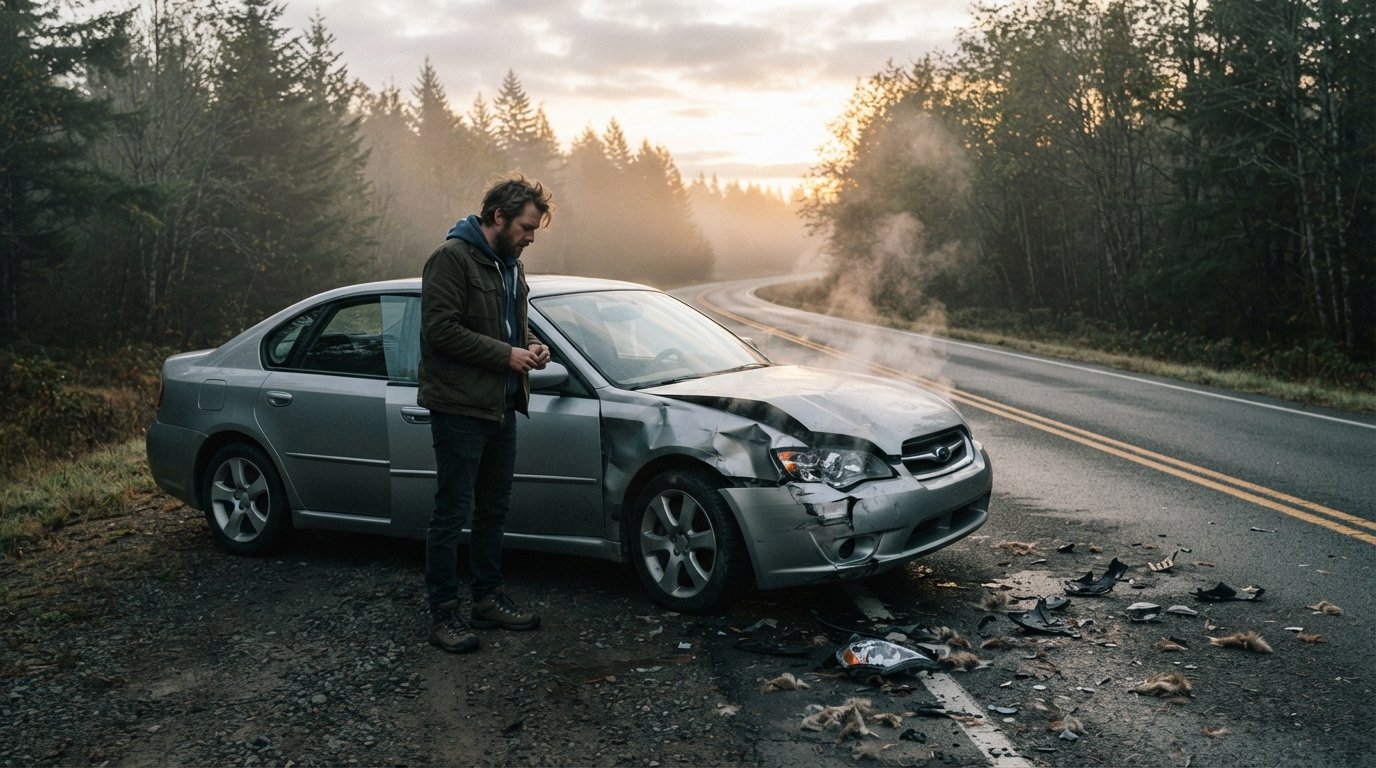
Picture this: it is 6:30 a.m. on a two-lane highway, the sun is just clearing the tree line, and a whitetail deer steps onto the asphalt without warning. You brake hard, but there is no time. The thud is sickening, your front bumper is crushed, and your hands are shaking. In the seconds after a wildlife collision, one question rises above the rest: does car insurance cover hitting a deer or animal? The answer depends on the coverage you carry, the state you live in, and how quickly you act after the incident. This guide walks you through exactly how claims work, what you can expect to pay, and how to protect yourself before the next close call.
How Animal Collisions Differ From Standard Accidents
Hitting a deer is not treated the same as rear-ending another driver. When you strike an animal, there is no other motorist to exchange information with, no police report naming a negligent party, and no third-party liability to pursue. That changes everything about how a claim is filed and which portion of your policy responds.
Most insurers classify an animal strike as a comprehensive claim rather than a collision claim. Comprehensive coverage is the part of your policy that pays for damage from events outside your control: theft, fire, hail, flooding, vandalism, falling objects, and yes, animal collisions. Collision coverage, by contrast, handles damage from impact with another vehicle or object such as a guardrail or telephone pole. This distinction matters because comprehensive claims typically do not trigger a surcharge the way at-fault collision claims often do.
There is one important exception to keep in mind. If you swerve to avoid an animal and hit a tree, a fence, or another car instead, many insurers will process that as a collision claim rather than a comprehensive claim, since the animal itself was never struck. That single detail can affect your deductible, your premium, and your claims history. If you are unsure how your carrier handles swerve-and-miss scenarios, ask before you need to file a claim.
Which Coverage Pays When You Hit a Deer
The short answer is that comprehensive coverage is the hero of this story. If you carry it, your insurer will typically pay to repair or replace your vehicle after an animal collision, minus your deductible. If you do not carry comprehensive, you are generally responsible for the entire repair bill out of pocket, even though the accident was not your fault in any moral or practical sense.
Here is how the major coverage types respond to a wildlife strike:
- Comprehensive coverage: Pays for damage to your own vehicle after hitting a deer, elk, moose, bear, or other animal. Usually required if your car is leased or financed.
- Collision coverage: May apply if you swerved and hit a fixed object or another vehicle instead of the animal itself.
- Liability coverage: Does not pay for your own vehicle. It only covers damage or injuries you cause to others, and animals are generally treated as property in some states.
- Medical payments or personal injury protection (PIP): Covers injuries to you and your passengers regardless of fault, which is critical since animal strikes can cause serious harm.
- Uninsured motorist coverage: Typically does not apply here because there is no other driver involved.
One nuance that surprises many drivers involves pets and livestock. If you hit a dog or a cow that belongs to someone else, the owner may be liable in certain circumstances, and your claim could involve their homeowner or farm policy. If you hit a stray dog or a wild animal, there is no one to pursue, so your own comprehensive coverage becomes the only path to reimbursement. Understanding these differences helps you set realistic expectations before you call your insurer.
Drivers who want a clear picture of how comprehensive and collision fit together can explore coverage explanations and comparison tools through independent resources such as NewAutoInsurance consumer guides, which break down policy types in plain language. Knowing which parts of your policy respond to which events is the single most valuable piece of insurance knowledge you can carry.
Deductibles, Premiums, and the Real Cost of a Deer Claim
Your deductible is the amount you pay before your insurer covers the rest of the repair. Comprehensive deductibles commonly range from $100 to $1,000, and many drivers choose a lower deductible specifically because comprehensive claims are relatively common in rural and suburban areas. If your deductible is $500 and the repair costs $4,200, you pay $500 and your insurer covers $3,700, assuming the damage exceeds your deductible and your policy is active.
The good news is that a comprehensive claim for an animal strike usually will not raise your premium the way an at-fault accident would. Insurers generally view wildlife collisions as unpredictable events rather than evidence of poor driving. That said, filing multiple comprehensive claims in a short period can still draw scrutiny, and some carriers review claims history at renewal. If the damage is only slightly above your deductible, paying out of pocket may be the smarter long-term play to keep your record clean.
There is also the question of total loss. If the repair cost exceeds a certain percentage of your vehicle's actual cash value, often around 70 to 80 percent, your insurer may declare the car a total loss and pay you the actual cash value minus your deductible. That payout may be far less than what you owe on a loan, which is why gap insurance exists. If you financed a new vehicle and a deer strike totals it, gap coverage can bridge the difference between your settlement and your loan balance.
State Laws and Wildlife Collision Rules
Insurance is regulated at the state level, and wildlife collision rules vary more than most drivers realize. In some states, you may be permitted to keep the deer you hit, though you usually need to notify law enforcement or a game warden first. In others, the animal remains state property and must be left alone or reported. These rules do not directly affect your insurance claim, but they do affect the paperwork you may need to file.
More importantly, some states have specific statutes about liability when a driver hits livestock. In open-range states, livestock owners may not be liable for animals that wander onto roads. In fence-law states, owners can be held responsible if they failed to maintain adequate fencing. If you hit a cow or horse and the owner is deemed negligent, you might be able to pursue a claim against their insurance rather than your own. This is where a local agent or an experienced claims adjuster becomes invaluable.
State minimum liability requirements also shape what you should carry. Liability coverage alone will not repair your car after a deer strike, so drivers who only meet their state minimums are fully exposed. Adding comprehensive coverage is often surprisingly affordable, frequently just a few dollars more per month, and it is the only reliable protection against wildlife collisions. If you are comparing policies across state lines or simply want to see how your current coverage stacks up, services that provide 2026 rental car insurance coverage updates can also clarify how comprehensive protection extends to borrowed or rented vehicles.
Step-by-Step: What to Do After Hitting an Animal
The moments after a collision are chaotic, but a clear sequence of actions protects both your safety and your claim. Follow these steps in order:
- Move to safety and check for injuries. Pull as far off the road as possible, turn on your hazard lights, and call 911 if anyone is hurt. Do not stand in traffic, especially on a curve or hill.
- Call the police and report the incident. A police report creates an official record that your insurer will want. In many jurisdictions, you are required to report any accident involving property damage above a certain threshold.
- Document everything. Take photos of your vehicle from multiple angles, the damage itself, the animal if it is safe to do so, and the surrounding scene. Note the time, location, weather, and road conditions.
- Do not approach the animal. An injured deer or other wild animal can be dangerous. Keep your distance and let law enforcement or animal control handle it.
- Notify your insurer promptly. Most policies require timely reporting. Have your policy number, photos, and police report information ready when you call.
After you file, your insurer will assign an adjuster, who will inspect the damage and either authorize repairs at a partner shop or issue a settlement check. Keep all receipts for towing, rental cars, and any related expenses, since some policies reimburse these costs. If your claim is denied, ask for the specific policy language behind the decision and consider appealing if you believe the classification is wrong.
Preventing Deer Strikes and Reducing Your Risk
You cannot eliminate the risk of hitting an animal, but you can reduce it dramatically. Deer are most active at dawn and dusk, particularly during mating season in the fall and when daylight saving time shifts in November. If you drive rural or suburban roads during those windows, slow down, scan the shoulders, and watch for the reflective eyeshine of animals caught in your headlights.
Remember that deer rarely travel alone. If you see one cross the road, assume others are following. Use high beams when there is no oncoming traffic to extend your visibility, and avoid overdriving your headlights so you have time to react. If a collision is unavoidable, brake firmly and stay in your lane rather than swerving into oncoming traffic or off the shoulder, since swerving often causes more severe accidents than the impact itself.
From a financial standpoint, the best prevention is coverage. Review your policy annually, confirm that comprehensive coverage is in place, and choose a deductible you could comfortably pay tomorrow if you had to. Bundling auto and home policies, maintaining a clean driving record, and asking about low-mileage or safe-driver discounts can offset the cost of adding comprehensive protection. If you want to see how much you could save by comparing carriers, a quick quote comparison takes only a few minutes and could reveal meaningful savings on the exact coverage that pays when a deer steps into your path.
Hitting a deer or any animal is frightening, but it does not have to be financially devastating. Comprehensive coverage is the key that unlocks reimbursement, and understanding your deductible, your state rules, and the claims process puts you in control. Take a few minutes today to confirm your policy includes comprehensive protection, and if it does not, get quotes from multiple carriers before the next deer crosses your lane.