
Telematics Car Insurance: How Driving Data Affects Your Rate
Telematics car insurance uses driving data to set your rate. Call (833)-275-7533 to compare quotes and see if you qualify for savings.

Your driving habits might be the most powerful discount tool you never knew you had. Telematics car insurance, also called usage-based or pay-per-mile insurance, uses a device or smartphone app to track how, when, and how much you drive. Insurers then use that data to set your premium, potentially rewarding safe, low-mileage drivers with significant savings. But the same technology that can lower your bill can also raise it, and the data collection raises privacy questions every driver should consider. This guide breaks down exactly how telematics car insurance works, how driving data affects your rate, who benefits most, and what to ask before you enroll.
What Is Telematics Car Insurance and How Does It Work?
Telematics car insurance is a type of auto coverage that uses telecommunications and informatics technology to monitor a vehicle's operation and the driver's behavior. Instead of pricing your policy solely on traditional factors like age, credit score, and location, insurers also factor in real-time driving data. This allows them to create a more personalized rate that reflects your actual risk on the road.
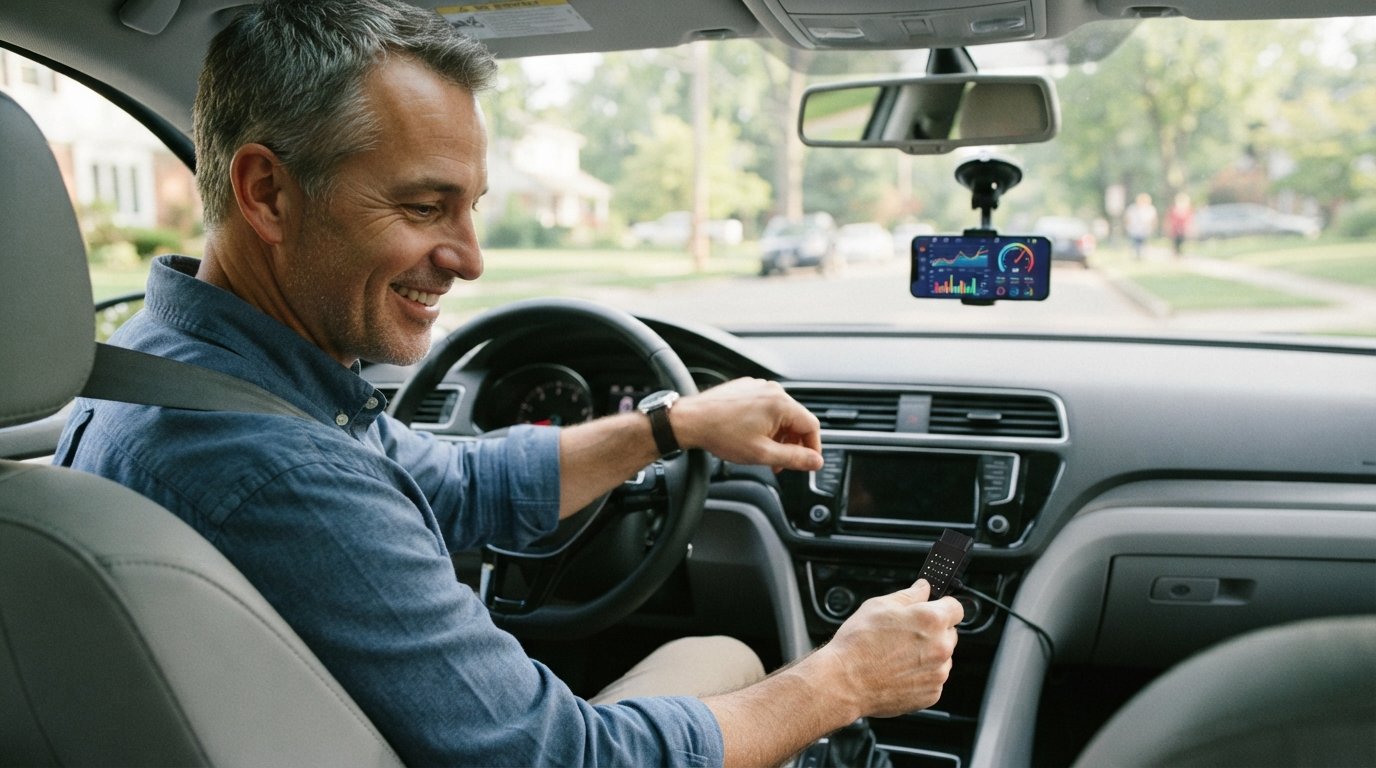
There are two main delivery methods for telematics programs. The first is a physical device, often called a dongle, that plugs into your car's OBD-II port (the same port mechanics use for diagnostics). The second is a smartphone app that uses your phone's sensors and GPS to track your trips. Some insurers offer a hybrid approach, using a device for the initial monitoring period and an app for ongoing feedback.
Once enrolled, the telematics system collects data on your driving and transmits it to the insurer. The insurer then analyzes this data to generate a driving score, which directly influences your premium at renewal or, in some pay-per-mile programs, your monthly bill. Understanding how driving data affects your rate is the key to deciding whether telematics is right for you.
The Driving Data That Shapes Your Rate
Telematics programs collect a variety of data points, but most insurers focus on a core set that they have found to be predictive of accident risk. The specific metrics vary by insurer, but these are the most common:
- Braking patterns: Hard braking events, defined as sudden, forceful stops, are a strong indicator of aggressive or distracted driving. Insurers track the frequency of these events.
- Acceleration: Rapid acceleration from a stop or while merging suggests risky driving behavior and is often penalized.
- Mileage: The total distance you drive is a primary factor. Low-mileage drivers often see the biggest savings because they spend less time on the road and have fewer opportunities for accidents.
- Time of day: Driving late at night or during rush hour is statistically riskier. Many programs track when you drive and may increase your rate if a large portion of your mileage occurs during high-risk hours.
- Speed: Some programs monitor your speed relative to posted speed limits, flagging excessive speeding as a risk factor.
- Phone usage: Smartphone-based apps can detect handheld phone use while driving, which is a major distraction and a significant risk factor.
- Location: GPS data can show where you drive, including whether you frequently travel in high-traffic or high-crime areas.
Each insurer weighs these factors differently. For example, one company might place heavy emphasis on braking, while another focuses more on mileage. The scoring algorithm is proprietary, but the general principle is consistent: smoother, slower, and less frequent driving leads to a better score and lower rates. It is important to note that telematics data is typically used for pricing and feedback, not for real-time monitoring or immediate penalty during the policy term, though some programs offer a discount for the first monitoring period and then adjust your rate at renewal.
Who Saves with Telematics and Who Pays More
Telematics car insurance is not a one-size-fits-all solution. The savings potential depends heavily on your driving profile. Understanding where you fall can help you decide whether to opt in.
Drivers who typically save:
- Low-mileage drivers: If you drive fewer than 10,000 miles per year, you are a prime candidate for savings, especially with pay-per-mile programs.
- Safe, smooth drivers: If you rarely brake hard, accelerate gently, and avoid late-night driving, your telematics score will likely be high, earning you a discount.
- Seniors and retirees: Many older drivers have established safe driving habits and low annual mileage, making them ideal for telematics discounts.
- Stay-at-home parents or remote workers: Limited daily commuting means less exposure to risk and lower premiums.
Drivers who may pay more:
- High-mileage commuters: If you drive long distances daily, your mileage-based premium could exceed a traditional policy, especially if you also drive during rush hour.
- Aggressive drivers: Frequent hard braking and rapid acceleration will lower your score and could increase your rate.
- Night owls: If you regularly drive between midnight and 5 a.m., you may be penalized for the higher risk associated with late-night driving.
- Drivers with inconsistent habits: If your driving varies widely, a telematics score might not capture your true risk accurately, and a traditional policy could be more stable.
It is also worth noting that some programs offer a guaranteed discount for signing up, such as 5% to 10% off, before any data is collected. However, the real savings (or penalties) come after the monitoring period, typically six months, when your rate is adjusted based on your driving score. If you are unsure where you fall, you can use a comparison platform to get quotes from multiple carriers, including those that offer telematics programs. For drivers in Texas, our guide on auto insurance quotes Texas can help you compare traditional and usage-based options side by side.
Privacy Trade-Offs and Data-Sharing Questions
Enrolling in a telematics program means sharing detailed information about your driving habits with your insurer. For many drivers, the potential savings outweigh the privacy concerns, but it is essential to understand what data is collected, how it is used, and who it is shared with before you sign up.
Telematics data can reveal sensitive information beyond just your driving. GPS data can show where you live, work, and worship, and when you are away from home. Some programs also collect data on phone usage, which could be used to infer personal habits. Insurers typically state that they use this data only for pricing and claims purposes, but data-sharing policies vary. Some insurers may share anonymized data with third parties for research or marketing, and a few have faced scrutiny for selling data to data brokers.
Before enrolling, ask your insurer these key questions:
- What specific data is collected? Is it just mileage and braking, or does it include GPS location, phone usage, and time of day?
- How long is the data retained? Is it stored for the duration of your policy, or longer?
- Who has access to my data? Is it shared with third parties, affiliates, or data brokers?
- Can I opt out of data sharing? What are the consequences for my premium if I do?
- What happens to my data if I switch insurers? Is it deleted, or does the insurer retain it?
Reading the privacy policy and terms of service is not glamorous, but it is the best way to protect yourself. If the policy is vague or you are uncomfortable with the level of data collection, you may be better off with a traditional policy. For more consumer-focused guidance on auto insurance, independent resources like NewAutoInsurance provide educational articles and FAQs that can help you navigate these decisions.
How to Compare a Telematics Quote Against a Traditional Policy
Comparing a telematics quote to a traditional policy is not as simple as comparing two premium numbers. You need to account for potential discounts, penalties, and the value of your privacy. Here is a step-by-step framework to make a fair comparison:
- Get a baseline traditional quote. Start by requesting a quote from the same insurer for a traditional policy with similar coverage limits. This gives you a reference point.
- Ask about the telematics discount structure. Find out the maximum possible discount, the guaranteed sign-up discount (if any), and the potential penalty for poor driving. Some programs only offer discounts, while others can increase your rate.
- Estimate your driving score. Be honest about your habits. If you know you brake hard frequently or drive late at night, assume a lower score and a smaller discount.
- Calculate your annual mileage. If you drive more than 12,000 miles per year, a pay-per-mile program may cost more than a traditional policy. Use your odometer or a mileage tracking app to get an accurate number.
- Factor in the privacy cost. Assign a value to your data privacy. If you are uncomfortable with GPS tracking, a traditional policy may be worth the higher premium.
- Compare total annual cost. Project your annual cost under both scenarios, including any discounts or penalties. Do not just compare the first-month premium.
It is also wise to shop around. Different insurers offer different telematics programs with varying discount structures. A comparison platform can help you gather quotes from multiple carriers quickly. Remember that telematics car insurance is just one option; the best choice depends on your individual driving profile and financial goals.
The Bottom Line on Telematics and Your Rate
Telematics car insurance offers a genuine opportunity for safe, low-mileage drivers to lower their premiums, sometimes by 20% to 30% or more. However, it is not for everyone. High-mileage commuters, aggressive drivers, and privacy-conscious consumers may find that a traditional policy is a better fit. The key is to understand exactly how driving data affects your rate, ask the right questions about data sharing, and compare quotes from multiple insurers before making a decision. By taking a proactive approach, you can use telematics to your advantage or avoid it altogether if the trade-offs do not align with your needs.